
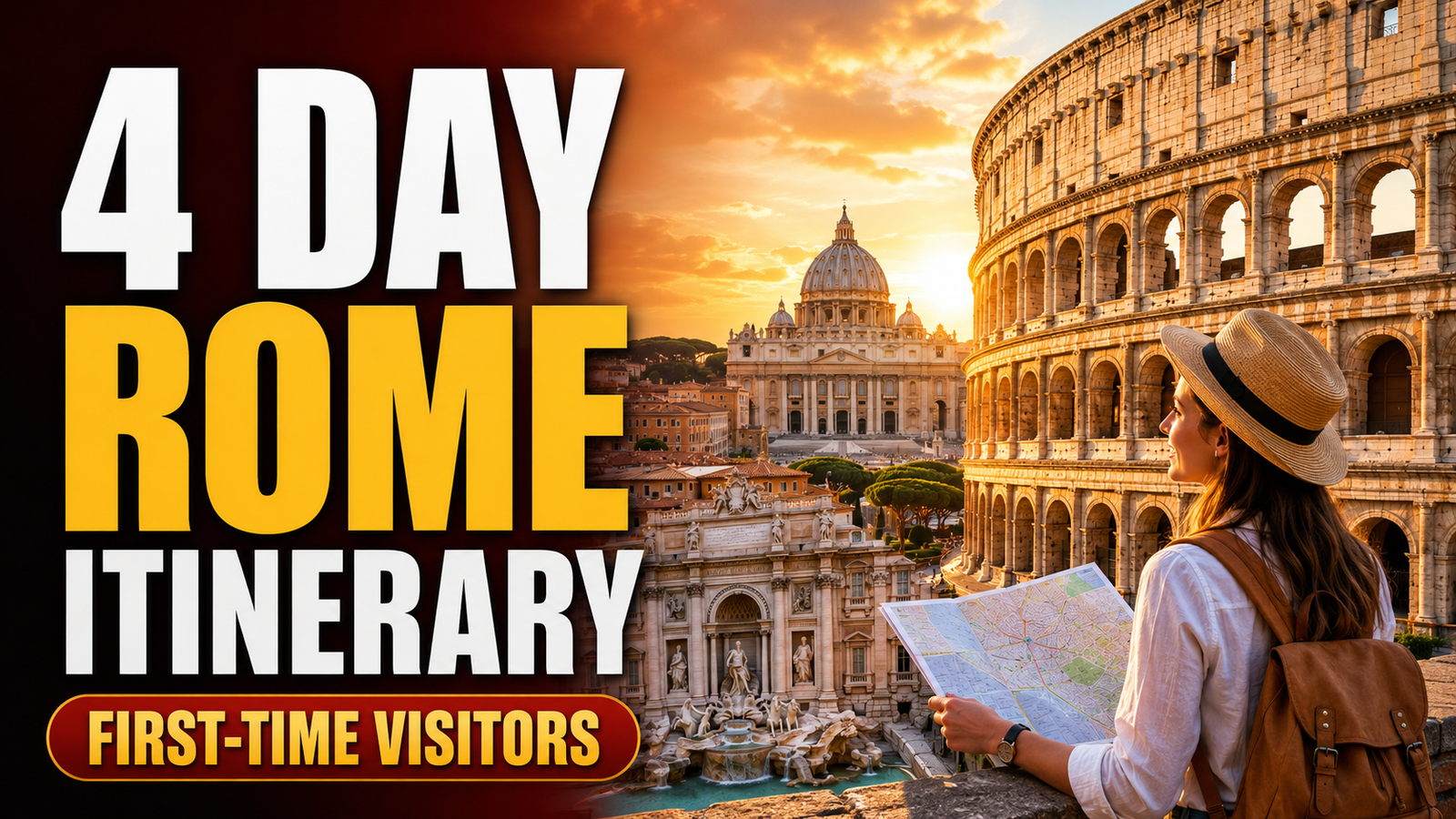
The ideal 4 day itinerary Rome gives one day to the Colosseum and Ancient Rome, one to the Vatican Museums and St. Peter’s Basilica, one to the Trevi Fountain, Pantheon and central piazzas, and one to Trastevere, the Jewish Ghetto and Appian Way. Reserve the Colosseum and Vatican before arranging the remaining days.
Quick recommendation for four days in Rome
Stay in Monti, the historic centre, Prati, or near a Metro Line A/B connection. Book your Colosseum and Vatican entries first because their timed slots control the itinerary. Keep Day 3 mostly walkable and Day 4 flexible, giving you room for weather changes, tired feet, or a half-day tour.
4 Day Itinerary Rome overview
| Day | Main area | Top sights | Walking | Book ahead |
|---|---|---|---|---|
| 1 | Ancient Rome | Colosseum, Forum, Palatine, Monti | High | Essential |
| 2 | Vatican | Museums, Sistine Chapel, Basilica | Medium-high | Essential |
| 3 | Centro Storico | Trevi, Pantheon, Navona, Spanish Steps | High | Pantheon advised |
| 4 | Local Rome | Appian Way/Testaccio, Ghetto, Trastevere | Flexible | Optional |
Compare tour options for a 4 day itinerary Rome
| Option | Best for | What it adds | Main limitation |
|---|---|---|---|
| Colosseum guided tour | First-time history lovers | Context and reserved timed entry | Fixed pace |
| Vatican small group | Art and culture visitors | Guide, headsets, highlights route | Crowds and higher cost |
| Historic-centre food tour | Food-focused travellers | Tastings and local stories | Less independent meal choice |
| Appian Way bike/e-bike tour | Active visitors | Transport, route and equipment | Weather and cycling suitability |
| Hop-on hop-off bus | Limited mobility or orientation | Easy overview between major areas | Traffic and stops not always near entrances |

4 Day Itinerary Rome — Day 1: Colosseum, Roman Forum and Monti
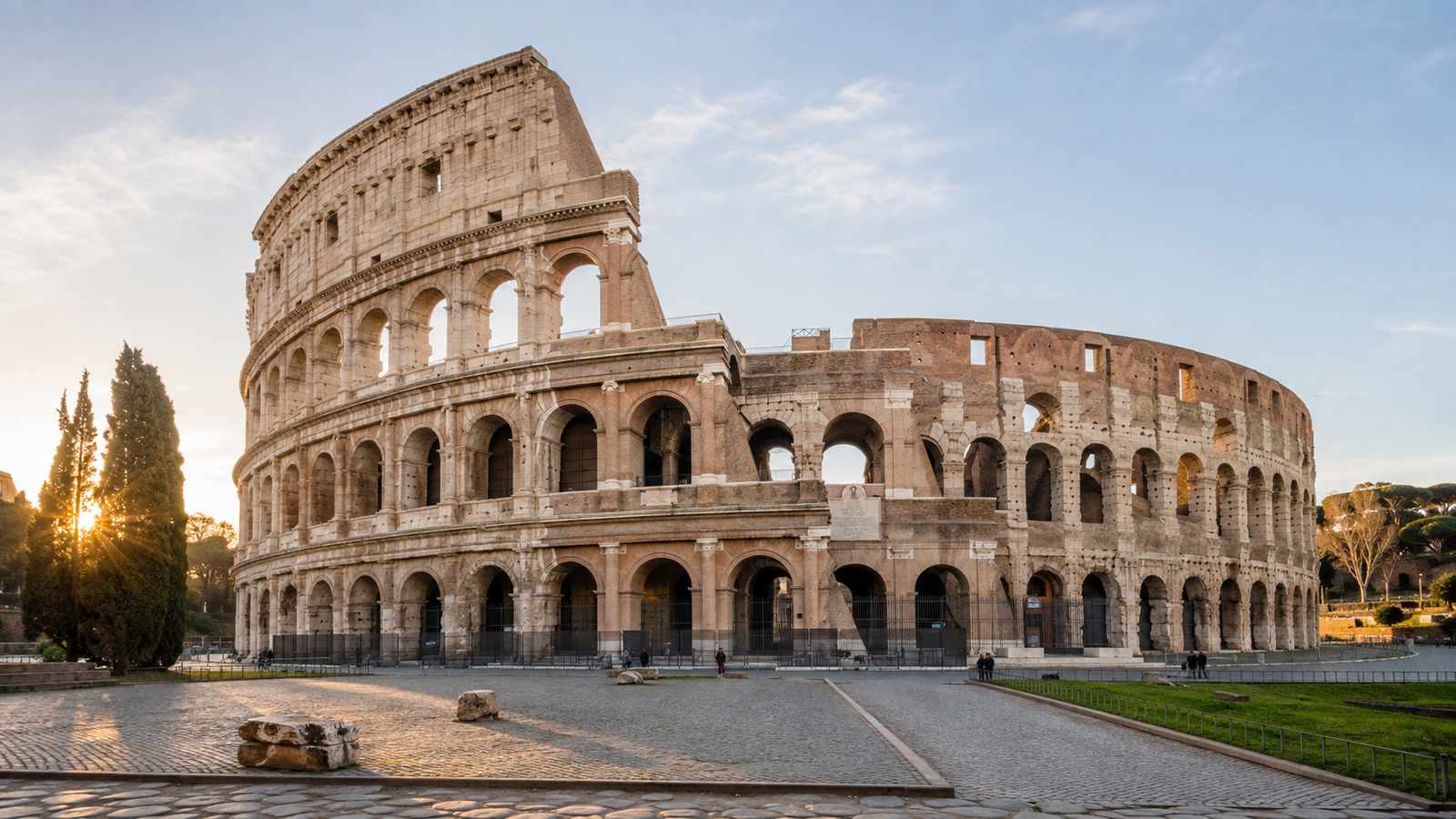
8:30 a.m. — Start at the Colosseum
Begin your first morning at Rome’s most recognisable monument. Choose the earliest practical timed slot, especially from May through September. Standard official admission covers the Colosseum, Roman Forum and Palatine Hill according to the selected ticket terms. Underground, arena-floor and attic products are separate limited-capacity experiences.
A guided visit is valuable here because the surviving stone becomes easier to understand when you can picture entrances, seating, stage machinery, animals and imperial spectacle. For a deeper comparison, read our guide to Colosseum underground tickets for 2026.
10:30 a.m. — Roman Forum and Palatine Hill
Exit toward the Forum and allow at least two hours. The archaeological zone has uneven paving, exposed sections, steps and limited shade. Follow a deliberate route rather than trying to identify every ruin: the Arch of Titus, Via Sacra, Temple of Antoninus and Faustina, House of the Vestals, Basilica of Maxentius and views from Palatine Hill create a satisfying first visit.
Carry water, wear shoes with grip, and bring sun protection. Rome’s summer heat is most tiring in the Forum because the site is broad and exposed.
1:30 p.m. — Lunch in Monti
Walk into Monti for lunch away from the immediate monument exits. Choose a simple Roman dish such as carbonara, cacio e pepe, amatriciana or saltimbocca. Avoid restaurants whose staff aggressively invite passers-by or whose menus cover every cuisine.
3:30 p.m. — Capitoline Hill and Piazza Venezia
Continue toward the Capitoline for elevated Forum views. Depending on energy, visit the Capitoline Museums or simply explore the square and walk toward Piazza Venezia. Do not force another large museum after a demanding archaeological morning.
Evening — Aperitivo and an early dinner
Return to Monti for aperitivo. Finish early enough to recover; the Vatican day is equally demanding.
4 Days in Rome — Day 2: Vatican Museums, Sistine Chapel and St. Peter’s
8:00 a.m. — Vatican Museums
Reserve one of the first entries and go to the Vatican Museums entrance on Viale Vaticano—not St. Peter’s Square. Standard museum admission includes the Sistine Chapel, while Basilica access is separate unless a tour explicitly combines them.
A guided highlights route keeps this enormous collection manageable. Expect the Gallery of Maps, classical sculpture, Raphael rooms where included, and Michelangelo’s frescoes. Silence and no photography apply inside the Sistine Chapel. Dress with shoulders and knees covered.
Use our detailed guide to the best Vatican skip-the-line tickets for 2026 before choosing a timed ticket or tour.
12:00 p.m. — Lunch in Prati
Walk toward Prati for lunch. The grid of streets north of the Vatican has delis, bakeries and restaurants with more breathing room than the immediate museum exit. Keep lunch moderate if you plan to climb the dome.
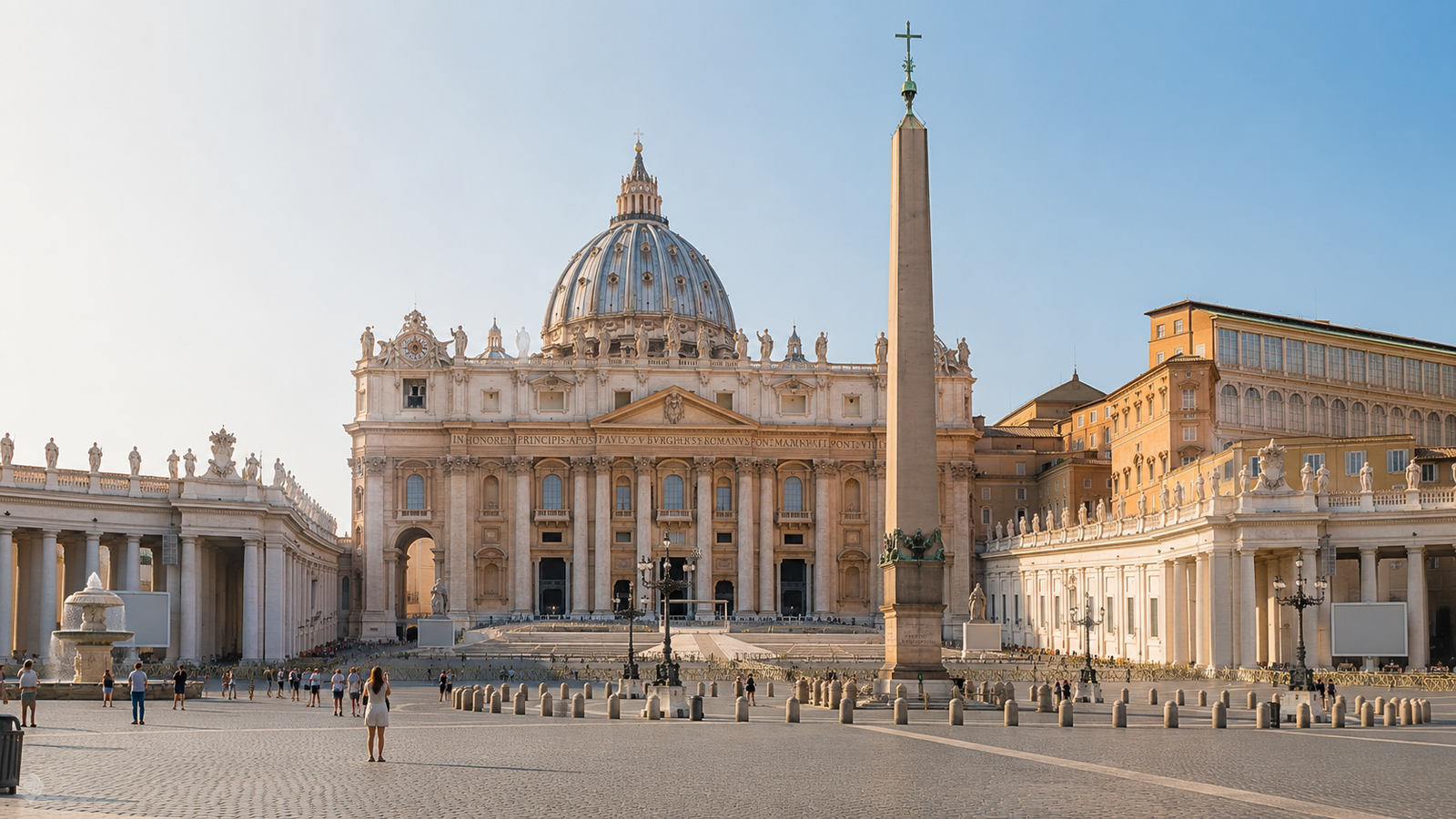
1:30 p.m. — St. Peter’s Basilica
Entry to the Basilica is normally free, but security queues can be long. Access may change for papal events, liturgies or security. A museum “skip-the-line” ticket does not necessarily skip the Basilica security line.
Inside, look for Michelangelo’s Pietà, Bernini’s baldachin and the monumental nave. The dome is a separate paid experience and requires time, stairs and tolerance for narrow spaces even when using the elevator for part of the ascent.
4:30 p.m. — Castel Sant’Angelo and the Tiber
Walk along Via della Conciliazione toward Castel Sant’Angelo. Tour the castle only if you still have energy; otherwise cross Ponte Sant’Angelo and enjoy the river. Sunset from the bridge area is a satisfying end to Vatican day.
Itinerary for Rome 4 Days — Day 3: Trevi Fountain, Pantheon and Piazzas
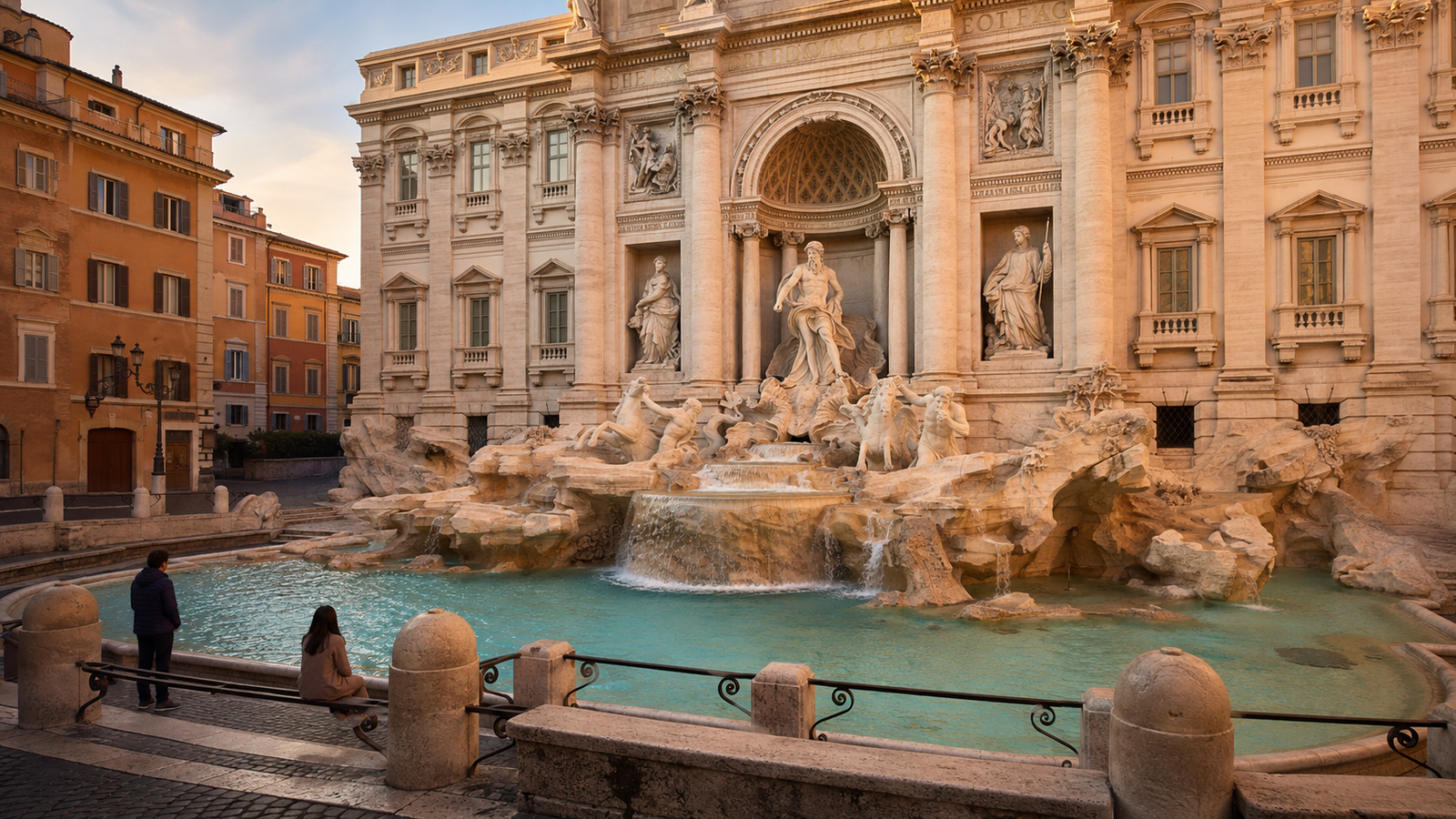
7:30 a.m. — Trevi Fountain
See the Trevi Fountain before the main daytime rush. From February 2, 2026, tourists and non-residents pay €2 to enter the controlled basin area closest to the monument between 9:00 a.m. and 10:00 p.m.; viewing from outside that controlled zone remains a different experience. Check current rules because visitor management can evolve.
9:00 a.m. — Spanish Steps and Via del Corso
Walk to the Spanish Steps, then continue through streets around Via del Corso. Sitting on the Spanish Steps is prohibited, so take photographs without blocking circulation. Stop for espresso at the bar rather than ordering an expensive terrace breakfast beside a landmark.
11:00 a.m. — Pantheon
The Pantheon rewards a slower visit. Notice the scale of the dome, the oculus and the way light moves across the interior. Timed entry reduces uncertainty. As an active church, opening and visitor flow can change for services.
12:30 p.m. — Piazza Navona and lunch
Walk to Piazza Navona for Bernini’s Fountain of the Four Rivers. Have lunch on a quieter side street rather than paying primarily for the piazza view. A food tour can work well this afternoon if tastings replace a full lunch.
3:00 p.m. — Campo de’ Fiori and Jewish Ghetto
Continue to Campo de’ Fiori, then walk toward Largo di Torre Argentina and the Jewish Ghetto. Explore the Portico of Octavia, Teatro di Marcello exterior and lanes around the synagogue. Try Roman-Jewish specialities such as carciofi alla giudia when in season.
Evening — Twilight walk
Return to your favourite central square after day-trippers leave, or cross the river for an early taste of Trastevere. Day 3 is intentionally flexible: coffee, churches and small discoveries are part of Rome, not wasted time.
4 Day Itinerary Rome Italy — Day 4: Appian Way, Testaccio and Trastevere
Your final day should show a Rome beyond the headline monuments. Choose one of two morning routes according to energy and interests.
Option A: Appian Way and catacombs
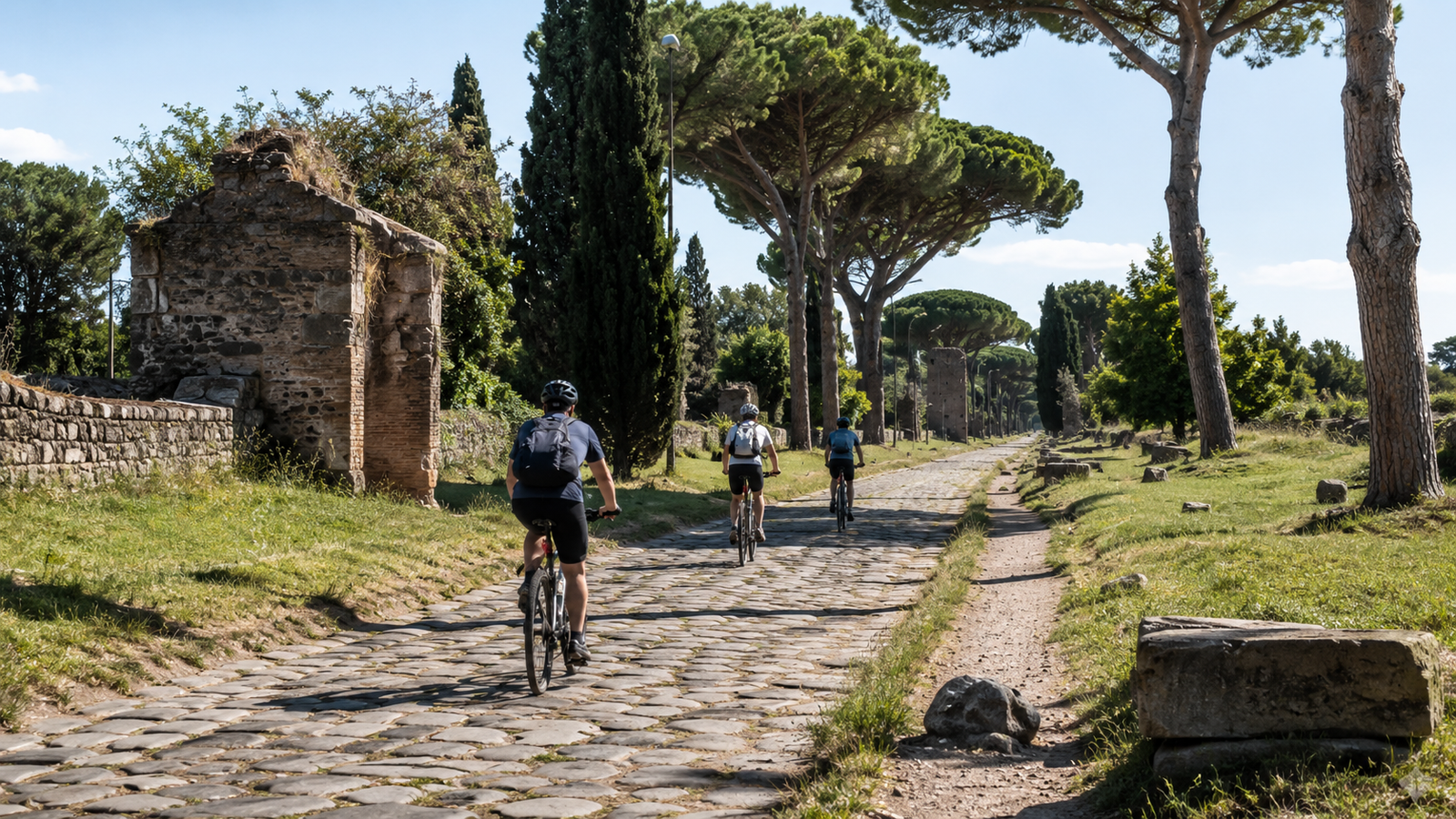
Take a guided bike, e-bike or transport-supported tour along Via Appia Antica. Ancient paving, aqueduct landscapes and catacomb visits create a strong contrast with central Rome. A guide simplifies transport and helps select safe, interesting sections.
This option is best for active travellers. Cobblestones, traffic connections, heat and weather make an independent ride less suitable for some visitors.
Option B: Testaccio food morning
Choose Testaccio if food matters more than cycling. Visit the market, learn how Rome’s working neighbourhood shaped dishes using humble ingredients, and sample pizza, cured meats, cheese or pasta. A guided food tour adds stories and pre-arranged tastings, while an independent morning costs less.
2:30 p.m. — Aventine Hill
Continue to the Orange Garden for a city view and walk around the peaceful Aventine. The famous keyhole can attract a line; treat it as optional rather than sacrificing an hour.
5:00 p.m. — Trastevere
Cross into Trastevere before dinner crowds peak. Visit Santa Maria in Trastevere, walk quieter lanes away from the busiest bars, and enjoy aperitivo. Reserve a well-reviewed restaurant if dining at a popular time.
Optional sunset: Gianicolo Hill
Energetic visitors can climb or take transport toward Gianicolo for a broad sunset view. Otherwise, finish beside the Tiber. A successful itinerary does not require squeezing in one last attraction.
What is included and excluded in Rome tours?
Commonly included
- Reserved attraction entry when stated
- Licensed guide and headsets
- Selected Colosseum access level
- Vatican Museums and Sistine Chapel when listed
- Bike/e-bike and helmet on cycling tours
- Food tastings on food tours
Commonly excluded
- Hotel pickup unless stated
- Public transportation
- Meals beyond named tastings
- Gratuities
- St. Peter’s dome admission
- Every optional attraction in this itinerary
- Guaranteed zero security waiting
Transportation and meeting-point information
Central Rome is best explored through a combination of walking, Metro and occasional bus or taxi journeys. Metro Line B serves Colosseo; Metro Line A is useful for Ottaviano near the Vatican, Spagna and other connections. Historic-centre landmarks such as the Pantheon and Piazza Navona require walking from surrounding stops.
Tour meeting points are often outside the attraction entrance. Colosseum groups may meet near Colosseo station, Oppian Hill or a provider office. Vatican groups frequently meet on Viale Vaticano, Via Tunisi or nearby Prati streets. Follow the exact voucher and arrive 15–20 minutes early.
For authoritative planning, check the official Rome tourism portal and the official Colosseum Archaeological Park ticket page. These are the two recommended high-authority external references.
Validate airport and public-transport information shortly before travel. Strikes, maintenance, special events and route changes can affect journey times.
Cancellation and booking considerations
Official attraction tickets often have strict change and refund conditions. GetYourGuide experiences each have their own terms: some allow free cancellation until a stated deadline or reserve-now-pay-later; others are non-refundable.
Book fixed, limited-capacity attractions first, but consider flexible products if flights or travel dates remain uncertain. Weather-sensitive bike and outdoor tours deserve particular attention. Read what happens if a site closes, a route changes, or minimum participant requirements are not met.
4 Days in Rome: accessibility and suitability
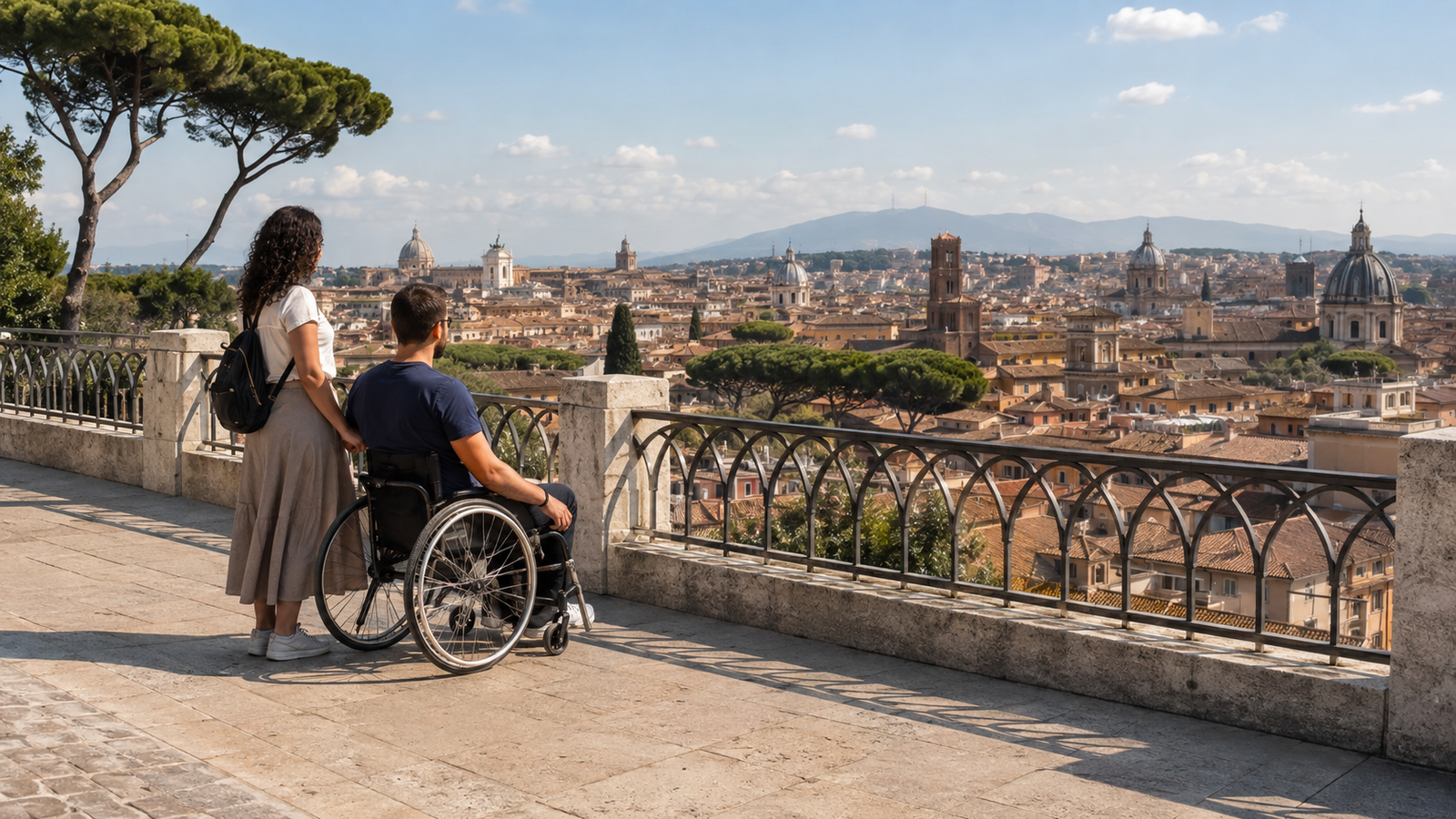
Rome’s cobbles, broken pavements, hills, heat and archaeological surfaces can make a standard itinerary demanding. A wheelchair user or traveller with reduced mobility should reduce daily stops, book accessible routes directly, and use taxis or private transport strategically.
- Colosseum: accessible sections and lifts exist, but underground and special routes differ.
- Roman Forum: uneven ground, inclines and limited shade require planning.
- Vatican Museums: accessible routes may differ from standard guided group routes.
- Historic centre: mostly level but heavily cobbled and crowded.
- Appian Way: cobbles make standard cycling unsuitable for many mobility needs.
- Families: keep one major timed attraction per half-day and schedule gelato, parks and restrooms.
Contact tour operators before booking if a wheelchair, stroller, service animal, hearing assistance or slower pace is required. “Accessible attraction” does not automatically mean every tour product follows an accessible route.
Best time to follow this Rome itinerary
April to May and late September to October usually provide a good balance of daylight and temperature, although crowds remain strong. Summer has long days but intense heat; move outdoor archaeology to the morning and rest during the hottest hours. Winter offers lighter crowds and shorter daylight, with occasional rain.
Each itinerary day takes roughly eight to ten hours including meals and transit. Do not interpret that as nonstop sightseeing. Plan a seated lunch, coffee break and one optional stop that can be removed without disappointment.
Important mistakes to avoid
- Booking the Vatican and Colosseum on the same day. Both deserve fresh energy.
- Waiting to reserve limited tickets. Underground Colosseum and desirable Vatican times sell early.
- Choosing distant sights on one day. Geographic grouping saves hours.
- Underestimating summer heat. Ancient sites have exposed walking.
- Using taxis for every journey. Traffic can be slower than walking.
- Ignoring dress codes. Vatican sacred sites require covered shoulders and knees.
- Eating beside every landmark. Walk two or three streets for better value.
- Overpacking the schedule. Rome rewards unscheduled churches, views and coffee.
- Assuming skip-the-line means no security. Mandatory checks remain.
- Forgetting the Trevi rule change. The closest basin zone has a €2 visitor charge during controlled hours in 2026.
Related Smart Travel Route guides
- Colosseum underground tickets 2026
- Best Vatican skip-the-line tickets
- Primary budget travel guide
- Eiffel Tower summit ticket guide
- How to book Eiffel Tower summit tickets
- Budget travel tips for Thailand
4 Day Itinerary Rome FAQs
Are 4 days in Rome enough?
Yes. Four days allow first-time visitors to see Ancient Rome, Vatican City, the historic centre and at least one local neighbourhood without compressing everything into an exhausting weekend.
Where should I stay for four days in Rome?
Monti suits Ancient Rome access, Prati suits Vatican convenience, and the historic centre suits walking. A location near Metro A or B can offer better value.
How much walking is involved?
Expect roughly 15,000–25,000 steps on full sightseeing days. Reduce this with Metro, buses, taxis, accessible tours and deliberate breaks.
Which tickets should I book first?
Book limited Colosseum access and Vatican Museums entry first. Then arrange the Pantheon, food tour, Appian Way or other experiences around those times.
Can I visit Rome without guided tours?
Yes. Independent travellers can use timed tickets and audio guides. A live guide adds the most value at the Colosseum, Forum and Vatican Museums.
Is the Roma Pass worth it for this itinerary?
It depends on the attractions selected and your public-transport use. Calculate eligible entries and reservations rather than assuming every major Vatican experience is included.
What is the best day for the Vatican?
Choose a Monday-to-Saturday morning that does not conflict with a major Vatican event. Avoid the crowded free last Sunday if a calmer first visit matters.
Should I visit the Colosseum underground?
It is worthwhile for visitors interested in staging and arena operations. Capacity is limited, so confirm the exact underground option before purchasing.
Can families follow this itinerary?
Yes, but shorten museum visits, add playground or gelato breaks, avoid peak heat and consider replacing the Appian Way with a child-friendly activity.
What should I pack?
Comfortable shoes, refillable water bottle, sun protection, light rain layer, portable charger and Vatican-appropriate clothing are the essentials.
Can I switch the days?
Yes. Adjust around ticket availability, museum closures, weather and religious events. Preserve geographic groupings even when changing the order.
How much time should I leave between bookings?
Allow at least 60–90 minutes beyond the expected finish of a major attraction before another fixed reservation.
Ready to plan your four days in Rome?
Reserve the Colosseum and Vatican first, keep the historic-centre day flexible, and use your fourth day to experience a more local side of Rome.
Yoast SEO settings
SEO title: 4 Day Itinerary Rome: Perfect First-Time Guide
Slug: 4-day-itinerary-rome
Meta description: Follow the perfect 4 day itinerary Rome for first-time visitors, including the Colosseum, Vatican, Trevi Fountain, food, transport and booking tips.
Focus keyphrase: 4 day itinerary Rome
Secondary keyphrases: 4 days in Rome; four days in Rome; itinerary for Rome 4 days; 4 day itinerary Rome Italy; 4 days in Rome Italy; Rome what to see in 4 days
Suggested schema: Article + FAQPage + BreadcrumbList. Use TouristTrip only if your implementation accurately represents the itinerary and passes validation.
Suggested excerpt: Plan four unforgettable days in Rome with a practical first-time itinerary covering Ancient Rome, Vatican City, famous piazzas, Trastevere, food and booking tips.
Affiliate link setting: Keep rel="sponsored nofollow" on GetYourGuide links.
1 thought on “4 Day Itinerary Rome: The Perfect Rome Itinerary for First-Time Visitors”