
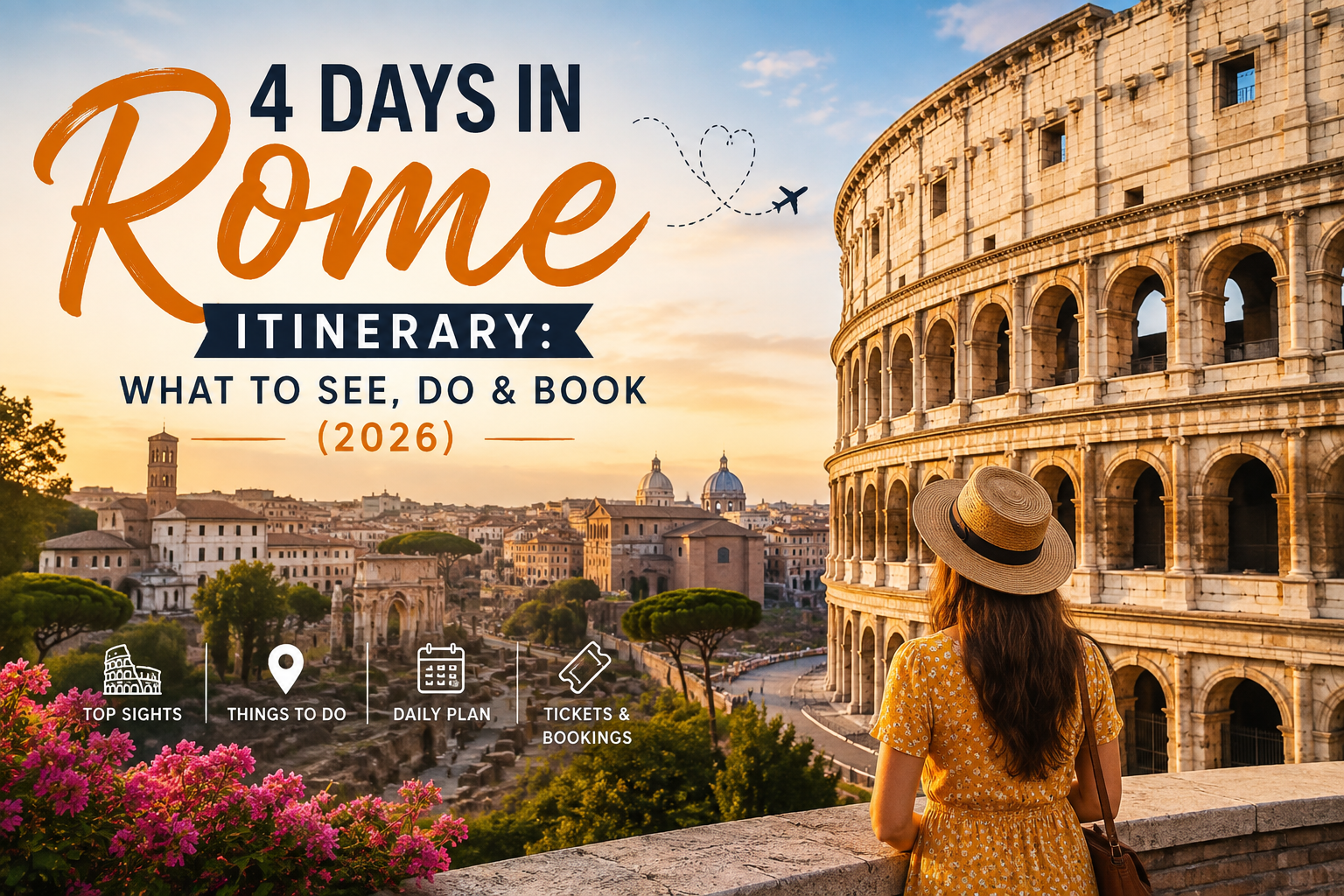
Planning your first trip to Rome is both thrilling and a little overwhelming. There’s the Colosseum, the Vatican, the Trevi Fountain, and a thousand other things vying for your attention. Where do you even start?
If you’ve got four days to spend in the Eternal City, you’re in a great spot. Four days is the sweet spot for a first visit. It’s enough time to hit the absolute must-sees without feeling like you’re sprinting through a museum. It gives you breathing room to get lost in a piazza, eat a proper pasta lunch, and actually soak up the atmosphere.
This 4-day Rome itinerary is designed to be realistic, practical, and easy to follow. It’s built around geography—grouping attractions by area to save you time and shoe leather. I’ll cover what to see, how to book your tickets, where to eat, and how to avoid the common mistakes that can turn a dream trip into a stressful one.
Before we dive into the day-by-day plan, let’s get one thing straight: your success here depends on what you book in advance. This isn’t a suggestion—it’s a necessity for the major sites.
This guide contains affiliate links. If you book through some of the links on this page, we may earn a small commission at no extra cost to you.
Quick Itinerary Overview
Here is a bird’s-eye view of your four days. This table is designed to help you visualize the flow of the trip.
| Day | Main Area | Major Attractions | Recommended Experience |
|---|---|---|---|
| Day 1 | Ancient Rome | Colosseum, Roman Forum, Palatine Hill | Guided Colosseum Tour |
| Day 2 | Vatican City | Vatican Museums, Sistine Chapel, St. Peter’s Basilica | Early Access Vatican Tour |
| Day 3 | Historic Center | Pantheon, Trevi Fountain, Spanish Steps, Piazza Navona | Walking Tour or Food Tasting |
| Day 4 | Trastevere & Local Rome | Trastevere, Janiculum Hill, Optional Attractions | Food Tour or Cooking Class |
How to Plan Your 4 Days in Rome
Before you start packing, there’s some crucial planning to do. This is the step where many travelers go wrong, so pay close attention.
Booking in Advance is Non-Negotiable
For the Colosseum and the Vatican Museums, you must book tickets in advance. These are two of the most visited attractions on the planet, and you’ll be turned away at the door without a reservation, especially during peak season.
The official Colosseum website states that timed-entry reservations are compulsory for all visitors. Ticket sales typically open 30 days before your visit date. The Vatican Museums also require advance booking for the Sistine Chapel. Plan to book both of these as soon as your travel dates are locked in.
The Geography Principle
Rome is surprisingly walkable, but the attractions are spread out. The worst mistake you can make is trying to do the Vatican in the morning and the Colosseum in the afternoon. You’ll spend more time on the Metro than enjoying the city.
This itinerary groups attractions by neighborhood. You’ll spend one day in Ancient Rome, one day in Vatican City, one day in the historic center, and one day in Trastevere. This simple strategy will save you hours of travel time.
Be Realistic About Walking
You will walk. A lot. It is not uncommon to walk 15,000 to 20,000 steps per day on a Rome trip. This means you need to prioritize comfortable footwear. Leave the new leather sandals at home and bring your most broken-in walking shoes.
Morning vs. Afternoon
Start your days early. Major attractions get crowded from 10:30 a.m. onwards. By arriving at opening time (usually 8:30 a.m. or 9:00 a.m.), you get a more peaceful experience and better light for photos. Afternoon slots are generally ideal for indoor activities like museums, which are unaffected by the midday heat.
Leave Some White Space
This itinerary includes plenty of sightseeing, but it’s deliberately not packed to the brim. You need time for lunch, gelato stops, and just sitting in a piazza to people-watch. That’s part of the Rome experience.
Day 1 – Ancient Rome: Colosseum, Roman Forum & Palatine Hill
Your first day is dedicated to the heart of ancient Rome. This is where you’ll walk in the footsteps of gladiators and emperors. Be prepared for a day of history that brings the past to life.
Morning – Colosseum
Start your day early. The Colosseum opens at 8:30 a.m. (opening times vary slightly by season, but this is a typical start). Arrive at least 15 minutes before your scheduled entry time to navigate security.
If you are visiting between March 29 and September 30, 2026, the official Colosseum Archaeological Park operates from 8:30 a.m. to 7:15 p.m., with the last admission at 6:15 p.m. It’s always a good idea to verify the official schedule for your specific date.
Should you book a guided tour?
If this is your first visit, absolutely. A guided tour transforms the Colosseum from a beautiful ruin into a living story. A good guide will point out details you’d never notice on your own—like the trapdoors and complex lifting mechanisms used for gladiatorial combat—and explain the social structure of the games.
What to bring:
Bring your passport or official ID, as it’s required for entry. A bottle of water is essential, and you might want a small bag (though large backpacks often require a separate check).
Visit Duration: Plan for about 1.5 to 2 hours inside the Colosseum. If you book a tour that includes the underground or the arena floor, it will take longer.
Booking Tip: If you book a guided tour that includes the Roman Forum and Palatine Hill, you often get skip-the-line access to all three sites, which saves time and money.
Practical advice: The best light for photos is the morning. The sun hits the exterior of the Colosseum perfectly, casting long shadows and illuminating the stonework.
Roman Forum
After the Colosseum, you are just a short walk from the Roman Forum. This was the political, commercial, and social hub of ancient Rome. While it looks like a jumble of ruins today, it was once the most important place in the Western world.
What you’ll see are the remains of government buildings, temples, and triumphal arches. You can walk along the Via Sacra, the “Sacred Way,” where emperors once paraded. It’s a truly humbling experience.
How much time to spend: Plan for about 1 to 1.5 hours. The Forum is largely outdoors, and it gets hot in the middle of the day, so consider doing this immediately after the Colosseum in the morning, or waiting until later in the afternoon.
Palatine Hill
The entrance to the Roman Forum and Palatine Hill are connected. You’ll generally enter the Forum first and then ascend the hill. This was the site of the imperial palaces, where emperors like Augustus and Domitian built their lavish homes.
Why it’s worth visiting:
Palatine Hill isn’t just about the ruins; it offers the best panoramic views of the Colosseum and the Roman Forum. The view from the terrace is one of the most iconic photo spots in the city. You’ll also see the remains of the Flavian Palace and the beautiful Farnese Gardens.
Duration: Allow about 1 hour. You’ll be doing some uphill walking, so take your time and enjoy the views.
Evening – Monti
After an intense day of history, you’ll want a relaxing evening. Head to the Monti neighborhood, which is just a short walk from the Colosseum.
Monti is Rome’s hip, bohemian district. It’s filled with cobblestone streets, vintage shops, and fantastic local restaurants. It feels like a village within the city, far removed from the crowds of the main tourist areas.
Where to eat:
Monti is known for its trattorias and osterias. Skip the places with “tourist menus” and look for restaurants with locals eating inside. The atmosphere is lively and authentic, making it the perfect place to decompress after a day of heavy sightseeing.
Day 2 – Vatican City, Sistine Chapel & St. Peter’s Basilica
Day 2 takes you across the Tiber River to Vatican City. This is a day for art, architecture, and awe. The sheer scale of the Vatican Museums and St. Peter’s Basilica is overwhelming, so pace yourself.
Morning – Vatican Museums
The Vatican Museums are vast. They house one of the world’s greatest art collections, and the Sistine Chapel sits at the end of the route. Arrive early to beat the crowds.
Important Planning Note:
The Vatican Museums have specific schedules and closure days. As of 2026, they are generally open Monday–Saturday from 8:00 a.m. to 8:00 p.m., with the final entry at 6:00 p.m. Sundays are typically different, often with limited hours or closures. It is essential to check the official Vatican website for your specific travel dates to avoid a scheduling disaster.
What you can’t miss:
The museum experience is a one-way route that ends in the Sistine Chapel. Along the way, you’ll pass through incredible spaces. Be sure to keep an eye out for:
- The Gallery of Maps: This long corridor features a series of painted maps of Italy. It’s not just historically fascinating but visually stunning.
- The Raphael Rooms: These four rooms were decorated by Raphael and his workshop. The “School of Athens” fresco is a masterpiece you’ll recognize immediately.
- The Sistine Chapel: You’ll arrive here at the end of the tour. It’s a monumental moment.
How to book:
Booking a guided tour is highly recommended here, as the crowds can be disorienting, and you can easily miss highlights in the massive corridors.
Sistine Chapel
The Sistine Chapel is the jewel in the Vatican’s crown. It’s a single room that contains two of the most famous works of Western art: Michelangelo’s ceiling frescoes (The Creation of Adam) and his Last Judgment on the altar wall.
What makes it important:
It’s impossible to overstate the influence of this room. The ceiling depicts scenes from Genesis, and the sheer scale and complexity of Michelangelo’s work is staggering. The “Creation of Adam” is arguably the most recognizable image in art history.
Don’t be that tourist:
Photography is strictly forbidden in the Sistine Chapel. You are asked to remain silent. This is actually a blessing—it forces you to put down your phone and truly look at the artwork. The chapel is also the site where Popes are elected, adding another layer of significance to the space.
St. Peter’s Basilica
After exiting the Sistine Chapel, you’ll make your way to St. Peter’s Basilica. This is the world’s largest church, built over the tomb of St. Peter. Its dome dominates the Vatican skyline.
What to see:
The interior is massive and opulent. You’ll see the famous Pietà by Michelangelo—a stunning marble sculpture of Mary holding the dead Jesus. You can also climb up to the dome for one of the best views of Rome. It’s a 551-step climb, but the panoramic views are worth every step.
Dress Code:
This is where you need to be aware of the dress code. Knees and shoulders must be covered to enter St. Peter’s. You can bring a scarf to cover your shoulders, but for men and women, shorts that end above the knee will get you turned away.
Duration: Plan to spend about 1.5 to 2 hours inside St. Peter’s, including the climb to the dome.
Evening – Piazza Navona
After a day of museums and basilicas, treat yourself to a relaxing evening in the heart of Baroque Rome. Piazza Navona is one of the most beautiful squares in the city, built on the site of an ancient Roman stadium.
What to see:
The square is defined by its three magnificent fountains. The centerpiece is the Fountain of the Four Rivers by Gian Lorenzo Bernini, featuring statues representing four major rivers from different continents. In the square, you’ll also find the church of Sant’Agnese in Agone.
Evening plan:
This is a great spot for an evening walk, maybe with a cone of gelato. The square is lively with street performers and a brilliant atmosphere. There are many restaurants in the alleys surrounding the square. Try to choose one a street or two back, as the restaurants directly on the square tend to be overpriced.
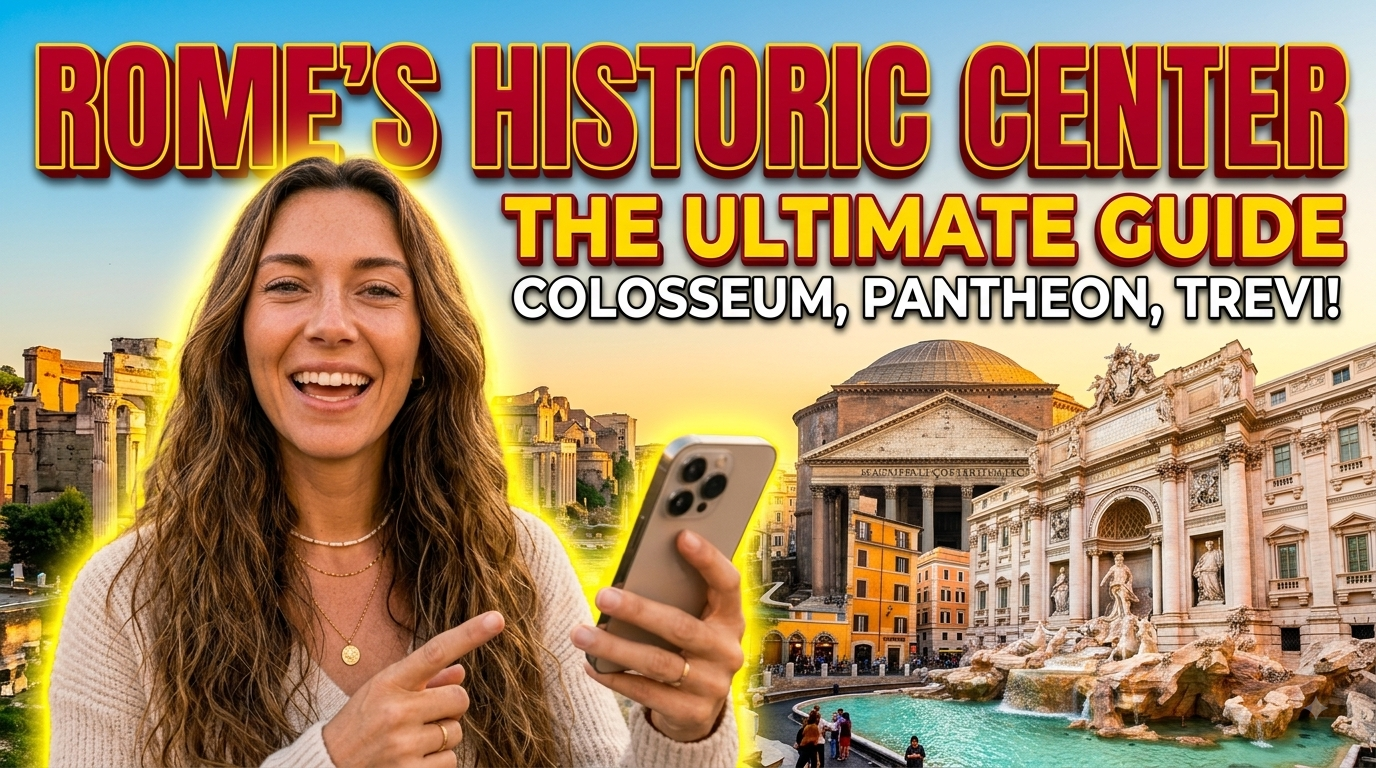
Day 3 – Rome’s Historic Center
Day 3 is entirely walkable. You’ll explore the city’s historic center, where every corner seems to turn up a new fountain, a hidden courtyard, or an ancient church. This is a day for leisurely exploration.
Morning – Pantheon
The Pantheon is one of the best-preserved ancient Roman buildings in the world. It’s a temple dedicated to all the gods, and its defining feature is a massive, unreinforced concrete dome with a central oculus that lets in a circle of light.
What to know before you go:
It’s free to enter, but it can get incredibly crowded. Arrive early to get a more contemplative experience. Inside, you’ll see the tombs of Raphael, the artist, and two Italian kings.
A trick for a photo:
The square outside, Piazza della Rotonda, is always busy. Try to get a photo that captures the fountain in the square with the Pantheon in the background for the classic shot.
Trevi Fountain
The Trevi Fountain is the most famous fountain in the world. It’s a monumental Baroque masterpiece, depicting the sea god Oceanus riding a chariot pulled by sea horses.
Practical Advice:
The secret to the Trevi Fountain is to visit it either very early in the morning (before 8:30 a.m.) or late at night. During the day, it is overwhelmingly crowded. It’s nearly impossible to get a photo without dozens of people in the background.
The coin toss:
You’ve probably heard the tradition—throw a coin over your left shoulder with your right hand to ensure you return to Rome. It’s a fun ritual, but it’s been updated: the “Three Coins” tradition says one coin ensures your return, two means you’ll find love, and three means you’ll marry.
Spanish Steps
The Spanish Steps is a grand staircase connecting the Piazza di Spagna with the Trinità dei Monti church. It’s a famous meeting point and a great place for people-watching.
What to see:
Climb the steps to get a view of the city from the top. The square at the base is home to the Barcaccia Fountain, a partially submerged boat designed by Bernini.
Nearby Streets:
The streets around the Spanish Steps, like Via dei Condotti, are home to Rome’s high-end shopping district. It’s a great place for window shopping and admiring luxury storefronts.
Piazza Navona (Revisited)
You’ll come back to Piazza Navona today, as it’s conveniently located between the Pantheon and the Spanish Steps. It’s one of the highlights of any Rome travel itinerary. You can plan to visit it for lunch or a coffee break.
Campo de’ Fiori
A short walk from Piazza Navona is Campo de’ Fiori. During the day, it hosts a vibrant and colorful market selling vegetables, fruits, flowers, and souvenirs. It’s a lively place to experience local life.
Evening:
At night, the market clears out, and the square turns into a lively area for bars and restaurants. It’s a great spot for a casual dinner.
Evening Food Experience
Day 3 is the perfect night for a food-focused activity. After three days of sightseeing, treat yourself to a food tour or a cooking class. This is an excellent way to learn about Roman cuisine and taste things you might not find on your own.
Day 4 – Trastevere, Local Rome & Flexible Experiences
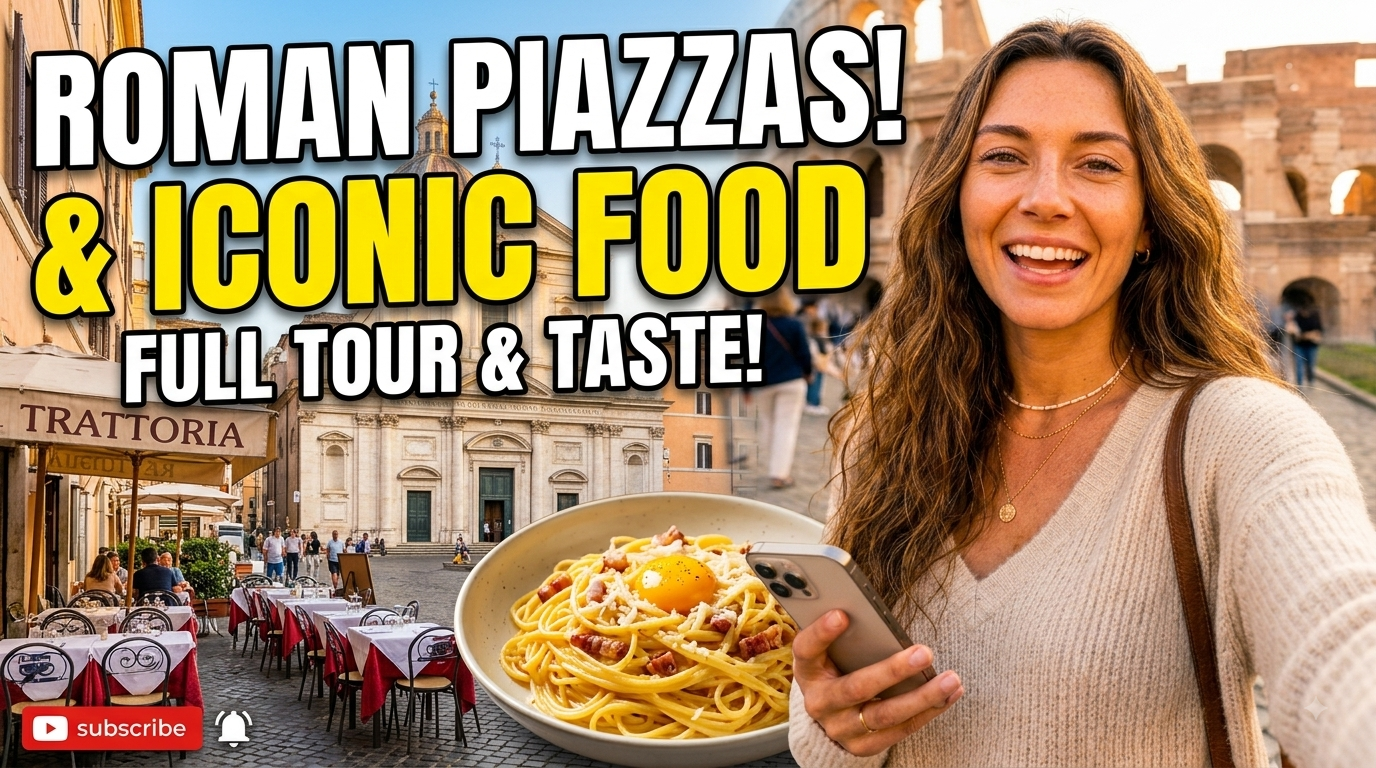
Day 4 is designed to be the most relaxed of the trip. You’ll cross the Tiber to Trastevere, a charming district known for its narrow, winding streets and vibrant nightlife.
Morning – Trastevere
Trastevere is the “other side of the Tiber.” It’s a neighborhood that feels more like a village. It’s characterized by narrow cobblestone streets, ivy-covered buildings, and a laid-back atmosphere.
What to do:
Get lost. That’s the best way to experience Trastevere. Walk without a destination and explore its winding alleyways. You’ll find hidden piazzas, tiny churches, and charming doorways perfect for photography.
Santa Maria in Trastevere:
This is one of the oldest churches in Rome, dating back to the 4th century. Its facade is stunning, and the interior is decorated with beautiful mosaics. It’s a must-visit while in the neighborhood.
Janiculum Hill
If you’re feeling energetic, walk up to the Janiculum Hill (Gianicolo). It’s not one of the “Seven Hills of Rome,” but it offers one of the best panoramic views of the city, particularly the dome of St. Peter’s.
Worth it?
If you’re tired from the previous days, this is optional. It’s a bit of a climb, but the reward is a spectacular view that rivals any in Rome. There’s also a cannon that fires every day at noon, a tradition you might catch if you time your visit right.
Lunch in Trastevere
Trastevere is one of the best neighborhoods for food in Rome. You’ll find countless trattorias and osterias tucked into its side streets.
A practical tip for choosing a restaurant:
Look for the Italian phrase “Cucina Romana” (Roman cuisine) on the menu. This indicates they serve traditional dishes. Also, avoid restaurants with a “tourist menu” displayed out front—the food is often mediocre and overpriced. Seek out places where you hear Italian being spoken.
Afternoon – Choose Your Experience
This is where Day 4 splits into options. You have the freedom to choose what you want to do with your final afternoon in Rome. Here are a few great ideas:
Option 1: Rome Food Tour
If you haven’t done one yet, this is the perfect way to explore Trastevere’s culinary scene. A local guide will take you to family-run bakeries, delis, and gelaterias, giving you a taste of the neighborhood’s soul.
Option 2: Cooking Class
Learn to make pasta from scratch. Many cooking classes in Trastevere will teach you how to make classic Roman dishes like Cacio e Pepe or Carbonara. It’s a fun and interactive experience.
Option 3: Castel Sant’Angelo
If you didn’t get enough of ancient Rome, this fortress is a fascinating site. It’s a multi-level structure that was initially built as a mausoleum for Emperor Hadrian. The views from its terrace are incredible.
Option 4: Borghese Gallery
This is a smaller, more manageable museum than the Vatican. It houses a stunning collection of Bernini sculptures and Caravaggio paintings. Crucially, you must book tickets in advance for the Borghese Gallery, as they are strictly timed and limited.
Option 5: Shopping and Relaxed Sightseeing
Spend the afternoon at a leisurely pace, shopping in the area around the Spanish Steps or Via del Corso, or simply sitting in a cafe, writing postcards, and watching the world go by.
Option 6: A Day Trip
If you are an incredibly efficient traveler and have seen everything else, you could consider a day trip to a nearby destination like Tivoli (to see Hadrian’s Villa and Villa d’Este) or Ostia Antica (ancient Rome’s port city). However, for a first-time visitor, staying in Rome and relaxing is generally the better choice.
What to Book Before Your Rome Trip
Here is your essential pre-trip booking checklist. This is the key to a smooth, stress-free experience.
- Colosseum, Roman Forum & Palatine Hill Tickets: Essential. Book on the official Coopculture website or through a trusted tour operator. Must be done at least 30 days in advance.
- Vatican Museums & Sistine Chapel Tickets: Essential. Book directly through the official Vatican Museums website or a reputable tour company. Do this as early as possible.
- Guided Tours: Highly recommended. Tours for the Colosseum and Vatican add significant context.
- Food Tours / Cooking Classes: Recommended for an authentic experience, especially if it’s your first trip.
- Borghese Gallery Tickets: Absolutely essential. Book these weeks in advance as they sell out quickly.
- Airport Transfer: Pre-booking an airport transfer can save you stress upon arrival, especially if you’re arriving late.
- Accommodation: Book early, especially for peak season. This will give you the best selection and prices.
- Flights: Book flights once your dates are confirmed. Compare prices and consider using a travel agent or booking platform.
- Travel Insurance: This is a must for international travel. Medical emergencies, trip cancellations, and lost luggage can happen to anyone. It’s a small price for peace of mind.
Best Rome Tours & Experiences to Book
Tours are a fantastic way to maximize your time, skip queues, and get historical context from an expert. Here are some popular options:
- Colosseum Guided Tour: Includes the underground and arena floor.
- Vatican Museums & Sistine Chapel Tour: Often includes an early-morning or late-afternoon option to avoid crowds.
- Rome Food Tour: Explore Trastevere or the Jewish Ghetto through its cuisine.
- Trastevere Food Experience: Focuses specifically on the culinary gems of this charming neighborhood.
- Cooking Class: Learn to make pasta, tiramisu, and other Italian classics.
- Ancient Rome Walking Tour: A walking tour of the Forum and Palatine Hill.
- Rome Evening Experience: A tour of the city’s illuminated night spots.
How to Get to Rome
Rome is served by two main airports: Fiumicino (FCO) and Ciampino (CIA).
Fiumicino Airport (FCO) is the larger, international airport. The most common way to get to the city center is the Leonardo Express train, which runs directly to Roma Termini station. It takes about 30 minutes and costs approximately €14 one-way.
Ciampino Airport (CIA) is smaller and serves mainly low-cost carriers. You can take a bus to Roma Termini (which takes about 40-50 minutes) or a taxi.
When looking for the best flight deals, it’s wise to compare prices across different airlines and dates. Flexibility can save you money.
Do You Need Travel Insurance for Rome?

Yes, travel insurance is a very good idea for any international trip. While Rome is a safe city, unexpected things can happen.
- Medical Emergencies: European healthcare is excellent, but without insurance, costs can be high for non-EU citizens.
- Trip Interruption or Cancellation: If you need to cancel or cut your trip short for a covered reason, insurance can help recover lost costs.
- Lost or Delayed Baggage: Airlines don’t always compensate for delayed luggage. Travel insurance can help you buy essentials while you wait.
- Travel Disruptions: Flight delays or cancellations can be covered by comprehensive policies.
It’s always better to have it and not need it than to need it and not have it.
How to Get Around Rome
Rome is a city best explored on foot, but public transport is available when you need it.
- Walking: This is your primary mode of transport. The city is compact, and many attractions are within walking distance of each other.
- Metro: Rome has two main Metro lines (A and B). They are useful for longer distances. For example, you would use the Metro to get from Termini to the Vatican or to the Colosseum.
- Buses: The bus network is extensive but can be confusing for tourists. They are useful for connecting areas not served by the Metro.
- Taxis: Official white taxis are available, but they can be expensive. Always make sure they use the meter.
- Public Transport Tickets: You can buy tickets at newsstands, tobacconists, or via the official ATAC app. The official ATAC system currently lists 24-hour, 48-hour, and 72-hour tickets, but check the app for current prices and digital ticket availability. Remember to validate your ticket on the bus or in the Metro turnstile.
Where to Stay in Rome for a 4-Day Trip
Choosing the right neighborhood can make or break your trip. Here’s a breakdown of the best areas:
- Centro Storico (Historic Center): This is the heart of Rome, with the Pantheon, Trevi Fountain, and Piazza Navona on your doorstep. It’s incredibly atmospheric and walkable, but it can be noisy.
- Monti: A hip, charming neighborhood near the Colosseum. It’s great for couples and friends, with excellent restaurants and a cool, bohemian vibe.
- Trastevere: Perfect for those who want a local experience. It’s lively, beautiful, and feels very authentic, but it’s a bit further from the major sights.
- Prati: A more upscale, residential neighborhood right next to the Vatican. It’s quieter and offers great value for larger hotels.
- Termini Area: The main train station area. This is a convenient location for transport, especially if you’re planning day trips. However, the area can be a bit chaotic and less charming than other neighborhoods.
What to Eat During 4 Days in Rome
Your trip isn’t complete without tasting the food. Rome is a culinary powerhouse. Here are the dishes you must try:
- Carbonara: This famous pasta dish is made with eggs, pecorino cheese, guanciale (cured pork cheek), and black pepper. No cream!
- Cacio e Pepe: A simple but genius dish of pasta, pecorino cheese, and black pepper. It’s creamy and incredibly satisfying.
- Amatriciana: A rich tomato sauce made with guanciale, pecorino, and chili flakes.
- Gricia: Similar to Carbonara but without the eggs—just guanciale, pecorino, and pepper.
- Supplì: Fried rice balls filled with mozzarella and ragù. They’re a popular street food snack.
- Pizza al Taglio: Pizza baked in large rectangular pans and sold by the slice. It’s perfect for a quick lunch.
- Gelato: The king of Italian desserts. Look for gelaterias where the colors are natural and not overly bright.
- Maritozzo: A sweet, pillowy bun filled with fresh whipped cream. It’s the perfect Roman breakfast.
How Much Does 4 Days in Rome Cost?
The cost of your trip will vary dramatically depending on your preferences and the season.
Budget Traveler:
- Accommodation: Hostels or budget guesthouses.
- Food: Street food, pizza slices, and cooking your own meals.
- Attractions: Focus on free sites like the Pantheon, Trevi Fountain, and walking tours.
- Overall: You can do a budget trip for a moderate daily cost.
Mid-Range Traveler:
- Accommodation: Comfortable, centrally located 3-star hotels.
- Food: Sit-down meals at trattorias and one nicer dinner.
- Attractions: Book guided tours for the Colosseum and Vatican.
- Overall: This is the most common travel budget.
Comfortable Traveler:
- Accommodation: Luxury hotels or boutique properties.
- Food: High-end restaurants, multiple courses, and fine wine.
- Attractions: Private tours and exclusive experiences.
- Overall: You’ll spend significantly more.
Prices vary widely by season, booking date, and hotel category. Always check current rates and availability.
How to Save Money on a Rome Trip
- Book Major Attractions Early: Booking online often gets you a better price than buying at the gate.
- Walk Between Attractions: Use the geographic grouping in this itinerary to save on transport costs.
- Compare Tour Options: Don’t just book the first tour you see. Shop around for the best value.
- Eat Away from Tourist Traps: Walk a few streets away from the Colosseum or Trevi Fountain for better, cheaper food.
- Use Public Transport Strategically: Walking is free, and the Metro is a very affordable way to cover longer distances.
- Travel During Shoulder Season: Visiting in late spring (May/June) or early fall (September/October) can save you money on flights and hotels compared to peak summer.
Is 4 Days in Rome Better Than 3 Days?
The short answer: Yes, 4 days is significantly better than 3 days.
If you have only 3 days:
It’s doable, but it’s a sprint. Your 3 days in Rome would likely be:
- Day 1: Colosseum, Roman Forum, Palatine Hill.
- Day 2: Vatican Museums, Sistine Chapel, St. Peter’s.
- Day 3: Pantheon, Trevi Fountain, Spanish Steps, and then you’d have to rush out.
That’s a lot to pack in. You wouldn’t have time for a proper food tour, exploring Trastevere, or just relaxing.
If you have 4 days:
That 4-day itinerary gives you that crucial “flexible” day. You get to explore the authentic side of Rome in Trastevere, take a cooking class, or visit the Borghese Gallery. It’s the difference between seeing Rome and experiencing it.
If you have 5 days:
You could add a day trip to a nearby town like Tivoli or Ostia Antica, or you could simply take it even slower and enjoy the city’s cafe culture.
Common Rome Itinerary Mistakes to Avoid
- Trying to see everything: It’s impossible to see all of Rome in a week. Accept that you’ll miss some things and make the most of what you see.
- Booking attractions on opposite sides of the city on the same day: Group your sightseeing geographically.
- Not reserving major attractions: This is the #1 reason for disappointment. Book the Colosseum and Vatican in advance.
- Underestimating walking: Rome is a walking city. Bring good shoes.
- Ignoring opening days: The Vatican Museums are often closed on Sundays. The Colosseum has different hours depending on the season. Check the official schedule.
- Planning too many museums in one day: Museum fatigue is real. Mix up indoor and outdoor activities.
- Not leaving time for meals: A good Roman meal takes an hour or more. Don’t schedule it too tightly.
- Forgetting comfortable footwear: Seriously, this is the most repeated piece of advice for a reason.
- Relying entirely on taxis: Taxis are expensive and can get stuck in traffic.
- Not checking official ticket information: Always check the official sites for the most current prices and procedures.
Rome Travel Tips for First-Time Visitors
- Comfortable Shoes: Your single most important travel item for Rome.
- Water: Carry a reusable water bottle. Rome has public water fountains (nasoni) where you can fill up for free.
- Dress Requirements: At St. Peter’s and other religious sites, shoulders and knees must be covered.
- Ticket Planning: Book everything you can in advance.
- Phone/Data: Get an eSIM or a travel data plan so you can access maps and booking confirmations.
- Cash/Card: Credit cards are widely accepted, but it’s good to have some cash for small purchases, markets, and taxis.
- Pickpocket Awareness: Rome is a safe city, but pickpocketing is common in crowded tourist areas. Keep your valuables in a cross-body bag and be mindful in crowds. Don’t be paranoid, just aware.
- Restaurant Etiquette: It’s customary to leave a small tip (around 10%) if service is good. Cover charges (coperto) are often included in the bill.
- Public Transport: Validate your ticket on buses and in the Metro turnstiles. You must validate it once, or you risk a fine.
- Attraction Opening Times: Always double-check opening times for your specific dates, as they vary.
- Booking Strategy: Book the Colosseum as soon as you have your dates (30 days in advance). Book the Vatican Museums and Borghese Gallery as soon as possible.
Your 4-Day Rome Itinerary at a Glance
| Day | Morning | Afternoon | Evening |
|---|---|---|---|
| Day 1 | Colosseum | Roman Forum & Palatine Hill | Monti Neighborhood |
| Day 2 | Vatican Museums & Sistine Chapel | St. Peter’s Basilica | Piazza Navona |
| Day 3 | Pantheon & Trevi Fountain | Spanish Steps & Historic Center | Food/Walking Experience |
| Day 4 | Trastevere | Flexible Activity (Tour/Shopping) | Final Roman Dinner |
Frequently Asked Questions About a Rome Itinerary
1. Is 4 days enough for Rome?
Yes, 4 days is a comfortable amount of time for a first trip to Rome. It gives you enough time for Ancient Rome, Vatican City, the historic center, and a slower day for neighborhoods such as Trastevere.
2. What should I do in Rome in 4 days?
Focus on the big three: Ancient Rome (Colosseum), Vatican City (Museums and St. Peter’s), and the historic center (Pantheon, Trevi, Spanish Steps). Use your fourth day for a more relaxed activity like exploring Trastevere or taking a cooking class.
3. Is 3 days in Rome enough?
3 days is enough to see the major highlights, but it’s a packed schedule. You’ll have no time for spontaneous exploration or food tours. If you have only 3 days, you’ll need to focus on the absolute must-sees and keep a fast pace.
4. What are the best things to do in Rome in 3 days?
In 3 days, you would cover the Colosseum, Roman Forum, Vatican Museums, Sistine Chapel, St. Peter’s Basilica, and the historic center’s highlights (Pantheon, Trevi Fountain, Spanish Steps). It’s a non-stop itinerary.
5. What should I book in advance in Rome?
You absolutely must book the Colosseum and the Vatican Museums in advance. It’s also highly recommended to book the Borghese Gallery, any guided tours you want, and a cooking or food tour. Dinner reservations are useful for popular restaurants.
6. Should I book a Colosseum tour?
Yes, a guided tour is highly recommended for first-time visitors. A guide provides historical context you wouldn’t get on your own and helps you understand the complex site. It also often includes skip-the-line entry.
7. How many days do you need in Rome?
4 to 5 days is the sweet spot. It allows you to see the major sights without rushing and provides time for a relaxing day or a day trip. For a truly deep dive, 7 days is excellent.
8. What is the best area to stay in Rome?
Centro Storico is best for walking access to most attractions. Monti is a hip, local choice. Trastevere offers a charming, authentic atmosphere. The best choice depends on your budget and travel style.
9. Is Rome expensive for tourists?
Rome can be expensive, especially during peak season and in the city center. However, you can manage costs by eating away from tourist traps, booking in advance, and walking. It is a city with options for all budgets.
10. What is the best way to get around Rome?
Walking is the best and most enjoyable way to get around. The Metro is good for long-distance trips, and buses are useful for specific routes. Taxis are available but less practical for daily commuting.
1 thought on “4 Days in Rome Itinerary: What to See, Do & Book (2026)”