

Choosing where to stay in Rome first time can make the difference between an easy, walkable trip and spending a large part of every day crossing the city. This guide compares the best Rome neighborhoods for sightseeing, Vatican visits, the Colosseum, food, nightlife, families, budgets, and a Rome 4 day itinerary.
Affiliate Disclosure: This article contains affiliate links. If you book a hotel, tour, ticket, or experience through one of these links, I may earn a commission at no additional cost to you. This helps support Smart Travel Route and allows me to keep creating detailed travel guides.
Where to Stay in Rome First Time: Quick Answer
For most first-time visitors, the Historic Center around the Pantheon and Piazza Navona is the best place to stay in Rome because many major attractions are walkable. Choose Monti for the Colosseum, Prati for the Vatican, Trastevere for food and nightlife, or Termini/Repubblica for lower prices and excellent transportation.
My Quick Recommendation
Best overall for a first trip: Pantheon / Piazza Navona
Best for the Colosseum: Monti
Best for Vatican sightseeing: Prati
Best for food and nightlife: Trastevere
Best for budget + transportation: Termini / Repubblica
Best for 4 days in Rome: Historic Center or Monti
Best for couples: Historic Center or Trastevere
Best for families: Prati or Historic Center
Best Areas to Stay in Rome for First-Time Visitors
Before looking at each neighborhood in detail, use this comparison to narrow your choices. Prices vary by travel date, hotel category, and how early you book, so the price levels below are relative rather than fixed nightly rates.
| Rome Area | Best For | Walkability | Transport | Price Level | First-Visit Rating |
|---|---|---|---|---|---|
| Pantheon / Navona | Best overall | Excellent | Bus / taxi | $$$ | ★★★★★ |
| Monti | Colosseum + ancient Rome | Excellent | Metro B | $$–$$$ | ★★★★★ |
| Prati / Vatican | Vatican + families | Very good | Metro A | $$–$$$ | ★★★★½ |
| Trastevere | Food + nightlife | Very good | Tram / bus | $$–$$$ | ★★★★ |
| Termini / Repubblica | Budget + transport | Good | Metro A/B + trains | $–$$ | ★★★★ |
My First Time Staying in Rome: What I Learned
Hi, I’m Ava, a travel blogger, and I still remember planning my first visit to Rome. Like many first-time travelers, I initially started searching hotels by price. I found several beautiful-looking rooms with good reviews and tempting nightly rates, and I almost booked one immediately.
Then I opened the map.
The property was technically in Rome, but getting to many of the attractions on my itinerary would have required buses or long journeys every morning and again at night. So instead of asking, “Which hotel is cheapest?”, I changed the question to:
That was a much better way to plan.
For my first visit, I wanted mornings when I could walk out of my accommodation, find coffee nearby, and begin exploring without immediately figuring out a bus or metro route. I also knew that I wanted to see the Pantheon, Piazza Navona, Trevi Fountain, Colosseum, Roman Forum, and the Vatican during the same trip.
My lesson was simple: when you have only four days in Rome, paying slightly more for the right location can sometimes save more than choosing a cheaper hotel far outside the center. You may save money on transportation, but more importantly, you save something you cannot buy back—your vacation time.

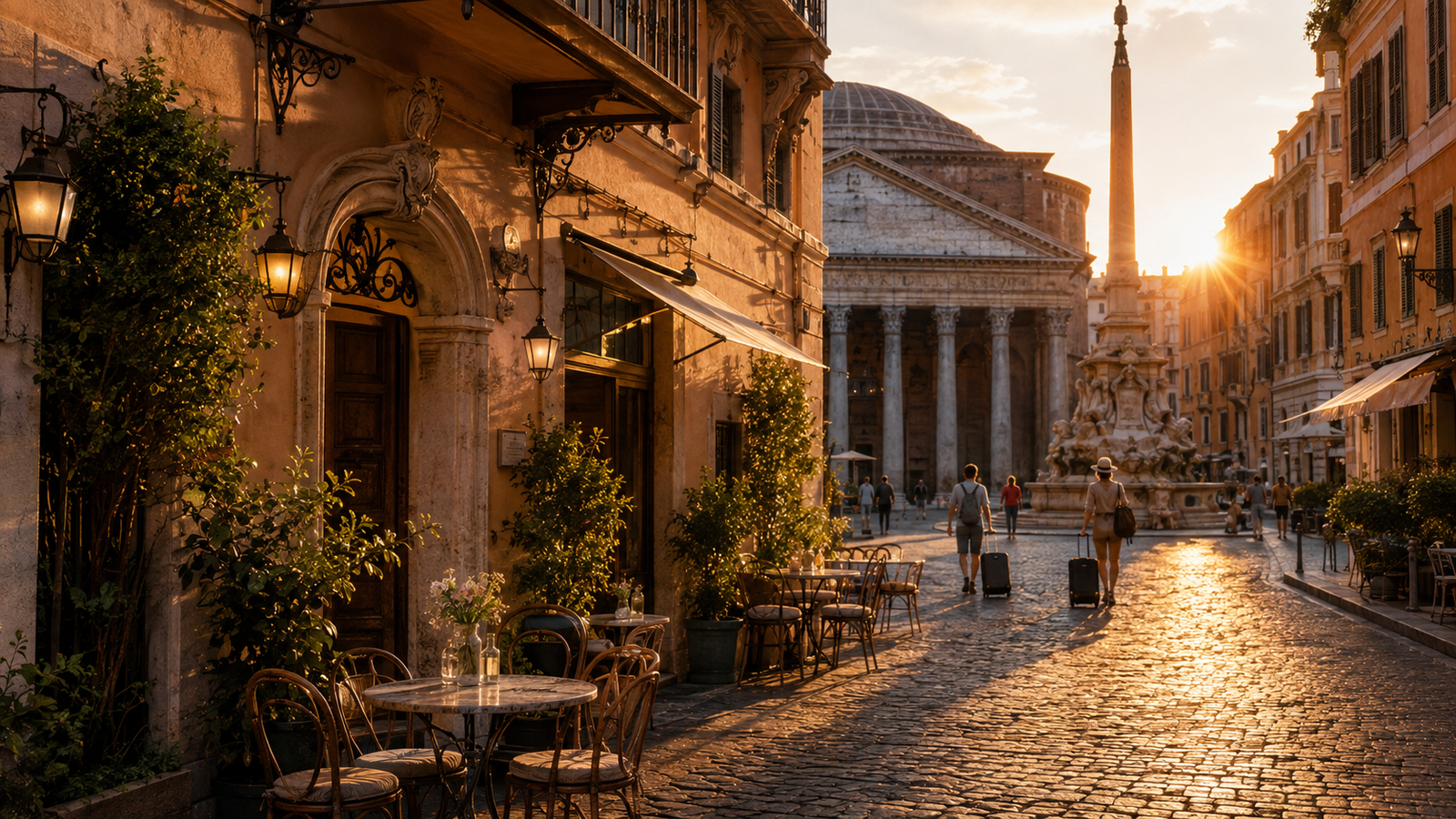
1. Historic Center: Best Overall Place to Stay in Rome for First-Time Visitors
Best area around: Pantheon – Piazza Navona – Campo de’ Fiori
If someone asks me only one question—“Where should I stay in Rome for my first trip?”—this is normally the area I would choose.
The biggest advantage is not a fancy hotel. It is what happens the moment you leave the hotel: you are already in the part of Rome that most travelers imagine before they arrive. You step outside into old streets, piazzas, churches, cafés, fountains, and historic buildings instead of beginning your day with a commute.
Why First-Time Visitors Should Stay Here
Depending on the exact location of your accommodation, you can often explore many of Rome’s best-known sights mostly on foot, including the Pantheon, Piazza Navona, Campo de’ Fiori, Trevi Fountain, Spanish Steps, Piazza Venezia, the Jewish Ghetto, and Castel Sant’Angelo.
The walking convenience is especially valuable during a short Rome itinerary 4 days trip because you can start sightseeing immediately in the morning and enjoy the historic center again after dinner without planning another journey.
Best for: first-time visitors, couples, short stays, photography, romantic trips, and travelers who love walking.
Less ideal for: strict budgets, travelers who require modern buildings, or anyone who strongly prefers a metro station beside the hotel.
What I Love About Staying Here
Morning is my favorite part. Imagine leaving your accommodation before the larger daytime crowds arrive, walking through a narrow cobbled street, passing a café opening for the day, and suddenly seeing the Pantheon appear at the end of the street. That feeling is difficult to recreate when your accommodation is several metro stops outside the center.
Possible Downsides
The location comes with a price. Accommodation around the Pantheon and Piazza Navona can cost more than hotels around Termini or neighborhoods farther outside the tourist center. You may also encounter tourist crowds, street noise, small rooms in historic buildings, older elevators, limited vehicle access, and restaurants charging more immediately beside major attractions.
The historic core is excellent for walking, but it does not have the same direct metro convenience as Prati, Monti, or Termini.
Ava’s verdict: 9.5/10. If this is your first trip to Rome and location matters more than finding the absolute lowest hotel price, begin your search around the Pantheon, Piazza Navona, and the surrounding historic center.
2. Monti: Where to Stay in Rome First Time Near the Colosseum
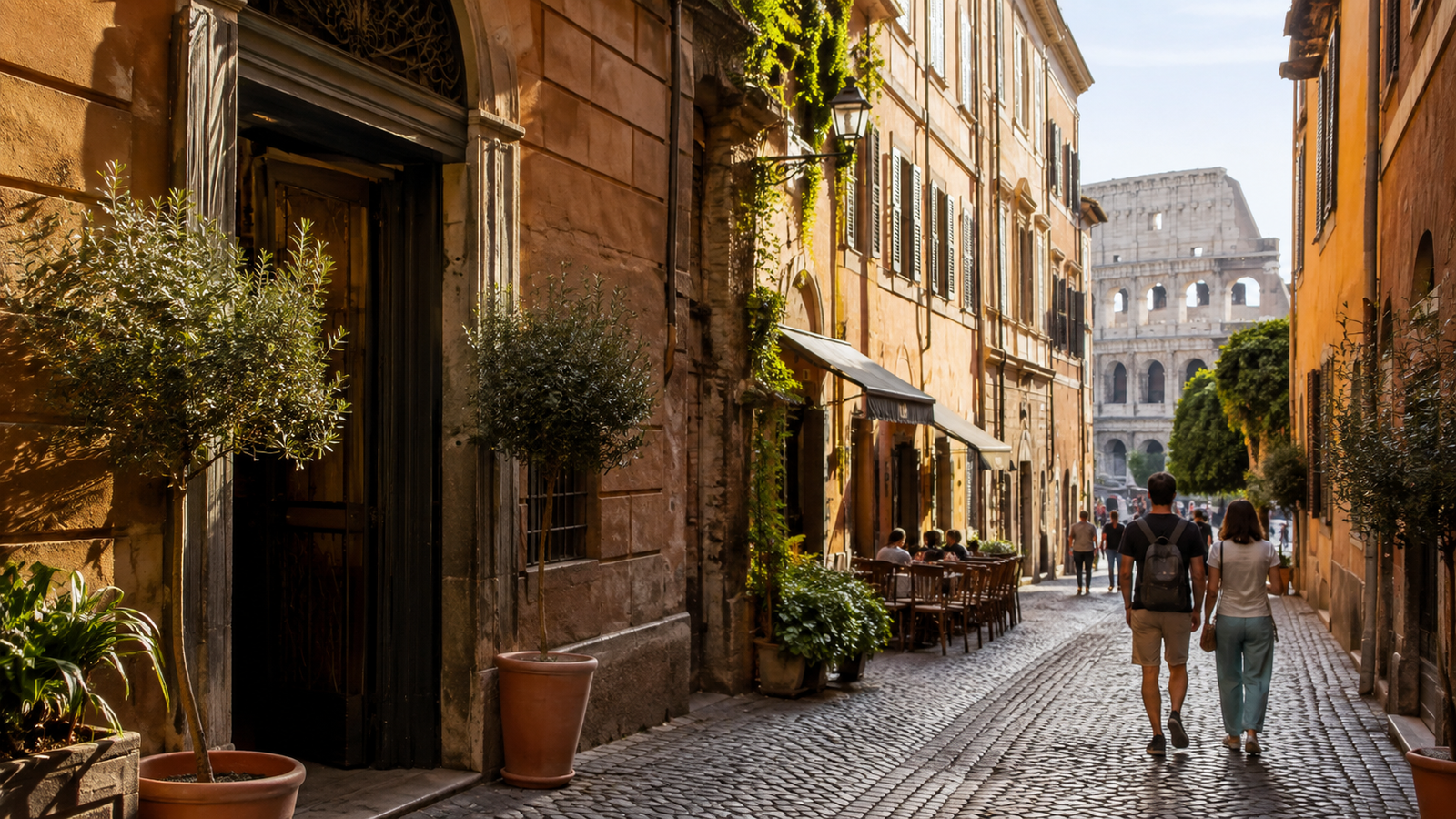
If the Colosseum is the attraction you have dreamed about seeing most, I would seriously consider Monti.
Monti combines three things extremely well: history, location, and neighborhood atmosphere. You can be close to the Colosseum and Roman Forum while still enjoying smaller streets, cafés, restaurants, and local-feeling corners away from the busiest attraction entrances.
Who Monti Is Best For
Monti is ideal for first-time visitors, couples, younger travelers, food lovers, travelers who want evening atmosphere without choosing Trastevere, and anyone planning to devote a full day to Ancient Rome.
Attractions Near Monti
- Colosseum
- Roman Forum
- Palatine Hill
- Imperial Forums
- Trajan’s Market
- Basilica di Santa Maria Maggiore
- Piazza Venezia
Transportation
Monti has an advantage over the Pantheon area because parts of the neighborhood are close to Metro Line B, including the Cavour and Colosseo side. Termini is also reasonably convenient from the northern part of Monti, making airport arrivals and train journeys easier.
Why I Like Monti for Four Days in Rome
Suppose your first full sightseeing day is Colosseum → Roman Forum → Palatine Hill → Monti → Piazza Venezia. If you are staying in Monti, you are not commuting to the start of your sightseeing day. You are already there. That is exactly how I would design an efficient Rome 4 day itinerary.
Downsides
Parts of Monti can become very busy, particularly around the Colosseum. Rome also is not flat, so some streets involve gradients, steps, uneven pavement, and cobblestones. That matters more than expected when you are carrying or pulling large luggage.
Ava’s verdict: 9/10. Monti is my favorite alternative to the Historic Center for travelers who want the Colosseum close by without giving up atmosphere or transport convenience.
3. Prati and the Vatican: Best Place to Stay for Vatican Sightseeing
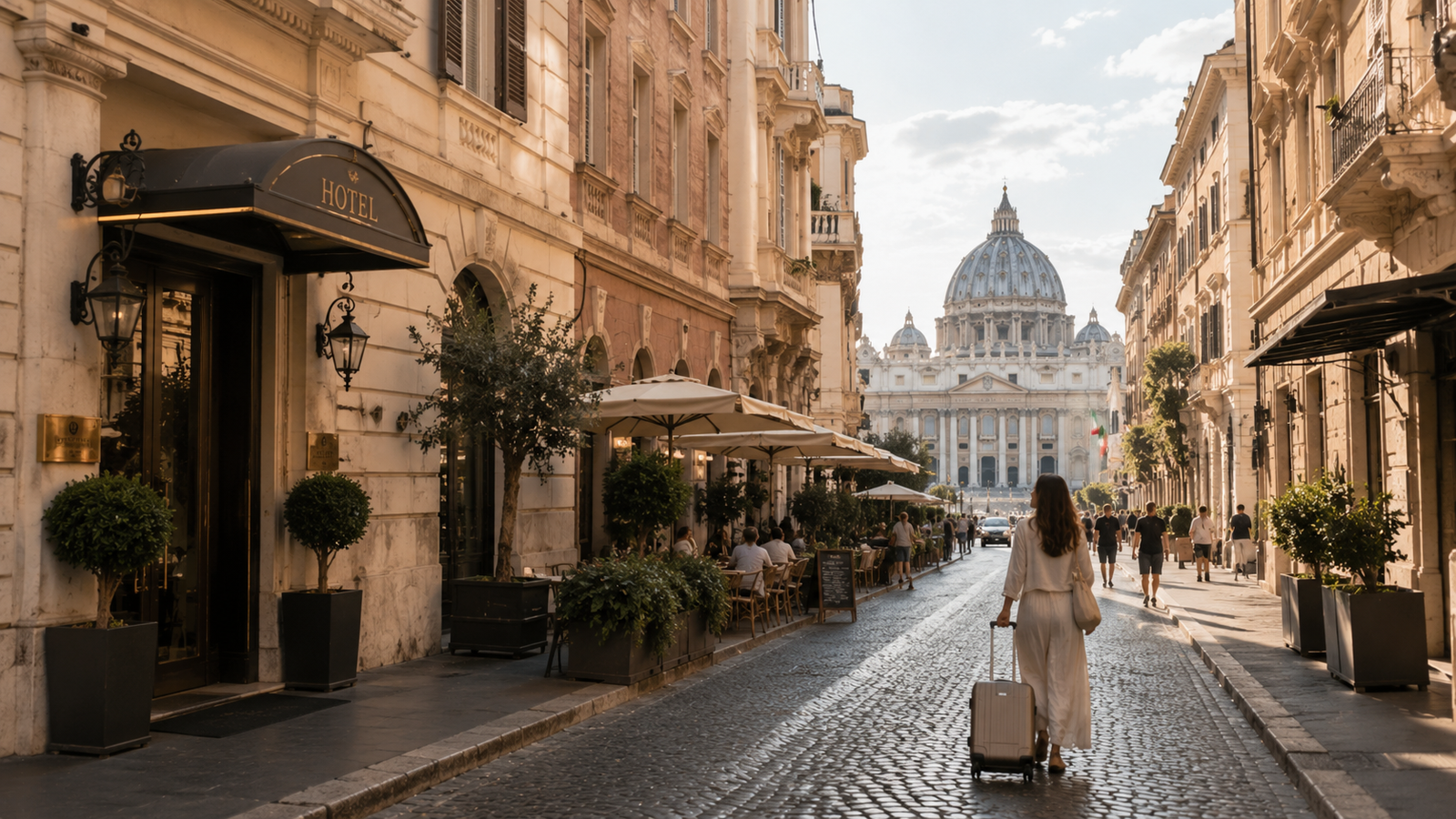
If your Rome trip revolves around Vatican City, look at Prati. Prati sits beside the Vatican and feels noticeably different from areas such as the Pantheon or Trastevere. It is a practical choice for travelers who want major sightseeing during the day but a somewhat calmer base at night.
Best For
Prati works particularly well for Vatican-first itineraries, families, couples, older travelers, travelers who want Metro Line A access, visitors who prefer quieter evenings, and people interested in shopping along streets such as Via Cola di Rienzo.
Nearby Attractions
- Vatican Museums
- Sistine Chapel
- St. Peter’s Basilica
- St. Peter’s Square
- Castel Sant’Angelo
- Via Cola di Rienzo
Transportation
Metro Line A is one of Prati’s biggest advantages. The Ottaviano area is particularly useful for Vatican sightseeing and gives you convenient public transport toward central Rome and Termini.
A Very Important Vatican Tip
Staying near Vatican City becomes even more valuable if you have an early Vatican Museums entry. Instead of waking up early and crossing Rome before your timed ticket, you may be able to walk from your hotel. That can make a big difference when you are trying to fit several high-demand attractions into four days in Rome.
Before choosing your ticket or tour, read my Vatican Skip-the-Line Tickets Guide.
Downsides
Prati does not feel as atmospheric at every corner as the tightly packed Historic Center. If most of your interests are the Colosseum, Roman Forum, and Monti, you will spend more time crossing the city.
Ava’s verdict: 8.8/10. For families and travelers prioritizing Vatican City, Prati may actually be a better choice than the Historic Center.
4. Trastevere: Best Area to Stay in Rome for Food and Nightlife
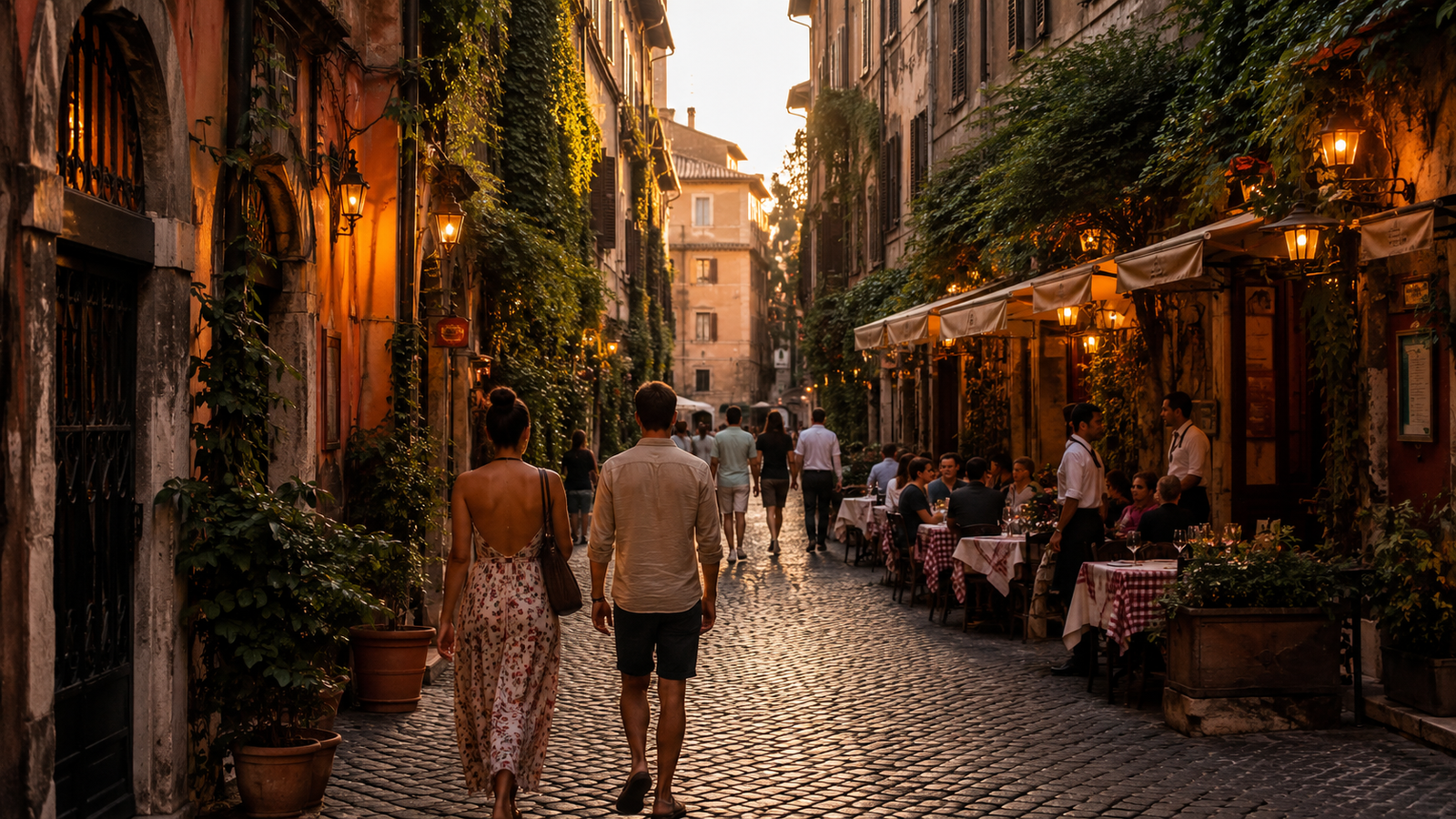
Trastevere is one of Rome’s best-known neighborhoods, and for good reason. It is packed with narrow streets, small piazzas, trattorias, cafés, bars, churches, and lively evening atmosphere. Staying here means the neighborhood itself becomes part of the trip.
What It Feels Like
During the day, explore narrow lanes, local shops, churches, courtyards, and small cafés. After sunset, the atmosphere changes. Restaurant tables fill, people gather in piazzas, aperitivo begins, and the neighborhood becomes one of the liveliest parts of central Rome.
Best For
Choose Trastevere if you love food, aperitivo, evening atmosphere, photography, couples trips, nightlife, and wandering without a rigid itinerary.
Nearby Places
- Santa Maria in Trastevere
- Villa Farnesina
- Janiculum Hill
- Tiber Island
- Jewish Ghetto across the river
- Campo de’ Fiori across the river
Is Trastevere Good for First-Time Visitors?
Yes—with one important condition. You should value atmosphere as much as pure transport convenience. Central Trastevere does not have the same simple metro access as Prati or Monti, so you will often depend on walking, buses, trams, or taxis.
For many travelers that is not a problem because central Rome is enjoyable on foot. But if you want a metro station a few minutes from your hotel, another area may work better.
Who Should Avoid Trastevere?
Think twice if you are a light sleeper, have major mobility difficulties, strongly prioritize metro convenience, or will be carrying very heavy luggage. Choose your street carefully because a room directly above a nightlife street can be completely different from a hotel on a quieter side road.
Ava’s verdict: 8.7/10. If your idea of Rome includes long dinners, evening walks, and lively streets after sightseeing, Trastevere is difficult to beat.
5. Termini and Repubblica: Best for Budget Travelers and Transportation
Termini does not always create the same instant romance as the Pantheon or Trastevere, but from a practical perspective it can be extremely smart. Roma Termini is Rome’s main railway hub, and the surrounding Termini–Repubblica–Via Nazionale area gives you access to trains, buses, taxis, Metro Line A, and Metro Line B.
Why Stay Near Termini?
The airport connection is one major advantage. If you arrive at Fiumicino and take the Leonardo Express to Termini, staying nearby means you may be able to walk to your hotel instead of taking another taxi or metro after your flight.
Best For
Choose Termini/Repubblica if you are traveling on a tighter budget, taking day trips by train, arriving late, leaving early, using public transport frequently, or simply want a wider choice of accommodation.
Nearby Attractions
- Basilica di Santa Maria Maggiore
- Baths of Diocletian
- Piazza della Repubblica
- Via Nazionale
- Monti
Where Exactly Should You Stay?
I would not choose a hotel solely because the description says “Termini.” Look at the exact street. For first-time visitors, I usually prefer accommodation toward Repubblica, Via Nazionale, or the Monti side rather than automatically choosing the cheapest room immediately beside the station.
Downsides
The station area is busy and often feels less romantic than the historic center. Street atmosphere can change within only a few blocks, so read recent reviews and look at the immediate map location before booking.
Ava’s verdict: 8.3/10. For sightseeing atmosphere, I prefer the Historic Center. For transport convenience and value, Termini can win.
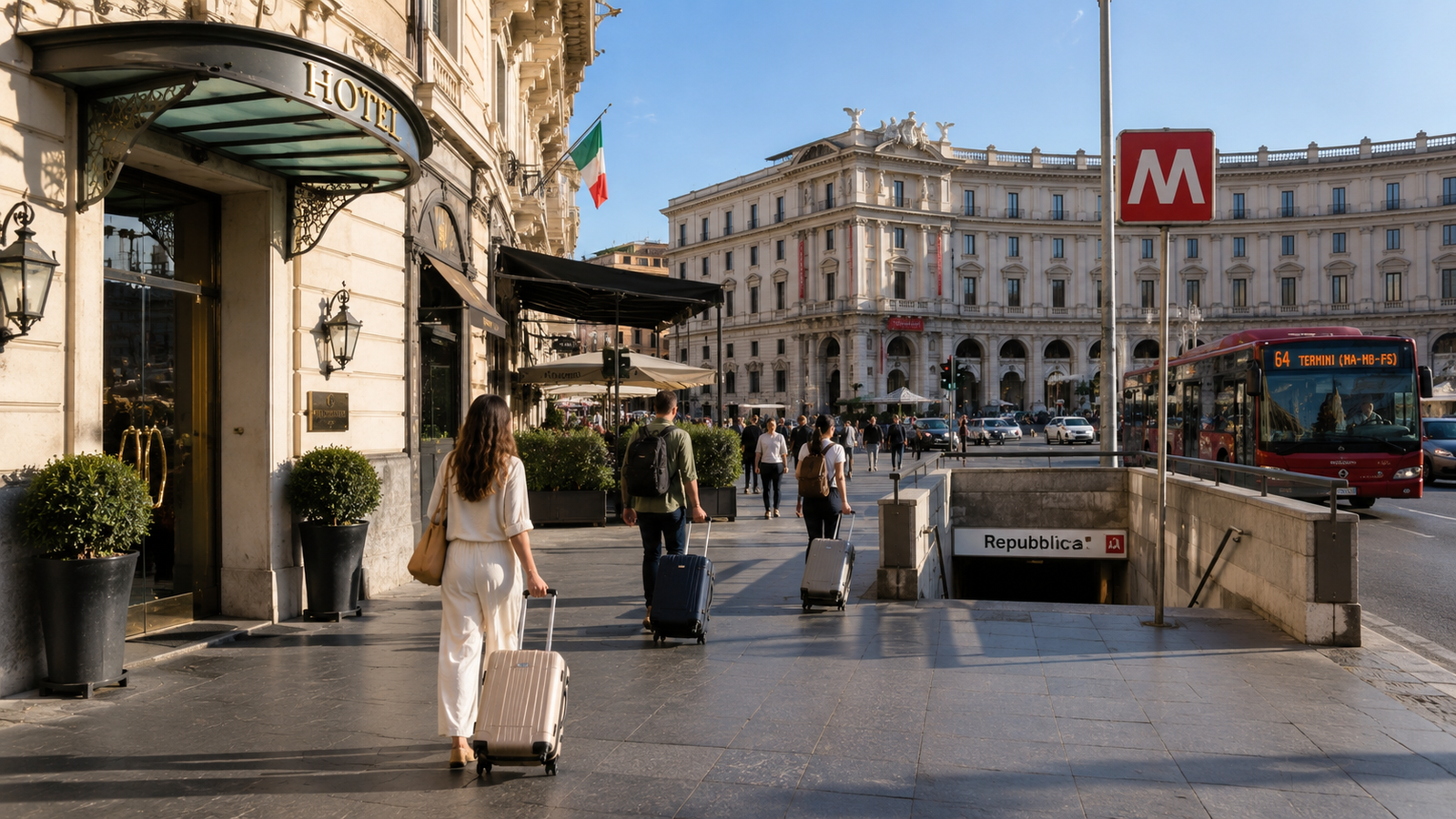
Bonus: Spanish Steps and Trevi — Best for Luxury
If budget is not a major concern and you want one of Rome’s most glamorous addresses, consider the area around the Spanish Steps, Trevi Fountain, and Via del Corso.
This part of Rome suits luxury trips, honeymoons, shopping-focused travelers, couples, and visitors who want famous Rome landmarks immediately outside the hotel. The obvious drawback is price: you pay a substantial premium for the address.
For most first-time travelers, I would compare these hotels directly against Pantheon/Navona options before making the final decision.
Where to Stay in Rome First Time for a 4-Day Itinerary
Your hotel should match the itinerary you intend to follow. If you are planning 4 days in Rome, this is how I would think about each sightseeing day.
Day 1 — Historic Rome
Piazza Navona, Pantheon, Trevi Fountain, Spanish Steps, Campo de’ Fiori.
Best hotel area: Historic Center
Day 2 — Ancient Rome
Colosseum, Roman Forum, Palatine Hill, Piazza Venezia, Monti.
Best hotel area: Monti or Historic Center
Day 3 — Vatican City
Vatican Museums, Sistine Chapel, St. Peter’s Basilica, Castel Sant’Angelo.
Best hotel area: Prati or Historic Center
Day 4 — Local Rome
Trastevere, Jewish Ghetto, food tour, Villa Borghese, or additional neighborhoods.
Best hotel area: Trastevere or Historic Center
Notice the pattern? The Historic Center works reasonably well for almost every day. That is why I consider it the strongest all-round base for a Rome itinerary 4 days.
Should You Change Hotels During Four Days in Rome?
For a typical four days in Rome itinerary, I would not split the trip between two hotels. You lose time packing, checking out, moving luggage, waiting for another room, and checking in again.
Rome’s major attractions are spread across the city, but they are not so separated that a four-day visit requires different hotels. Pick one strategically located property and use it as your base for the entire stay.
I would only consider moving hotels if Rome is part of a larger itinerary—for example, staying close to Termini on the final night before an unusually early train.
Where to Stay in Rome From the Airport
Arriving at Fiumicino Airport
If you take the Leonardo Express to Roma Termini, Termini/Repubblica is obviously the easiest hotel area for arrival. But I would not choose your entire vacation location only to save one taxi ride.
You can arrive at Termini and then continue toward the Historic Center, Monti, Prati, or Trastevere. If you are traveling with a family or several suitcases, an airport taxi or private transfer may make a Historic Center hotel much easier.
Arriving at Ciampino Airport
Direct airport coaches commonly connect Ciampino with Termini, so similar logic applies. If you value convenience after a late flight, compare a taxi or pre-booked private transfer with the coach before deciding.
Internal-link opportunity: Once your Rome Airport to City Center: Train, Bus, Taxi & Transfer article is live, add a contextual link here using the anchor text Rome airport to city center.
Transportation From Each Recommended Rome Neighborhood
| Neighborhood | Metro | Walking | Bus / Taxi | Airport Convenience |
|---|---|---|---|---|
| Historic Center | Limited | ★★★★★ | Excellent | Good |
| Monti | Metro B nearby | ★★★★★ | Excellent | Very good |
| Prati | Metro A | ★★★★ | Excellent | Good |
| Trastevere | No central metro | ★★★★ | Tram / bus | Good |
| Termini | Metro A + B | ★★★★ | Excellent | ★★★★★ |
For current network information, use official Rome ATAC transport maps.
Where to Stay in Rome for Families
For families, I would narrow the search to three areas:
- Prati: my favorite family choice because it can feel calmer, has Metro Line A access, and works extremely well for Vatican sightseeing.
- Historic Center: best for minimizing daily transport and allowing children to walk between many attractions.
- Monti: a great option when children are especially excited about gladiators, ancient Rome, and the Colosseum.
When booking, check elevator availability, family-room configuration, air conditioning, cribs, breakfast, luggage storage, and late check-in policies. Historic Rome has many older buildings, so never assume an elevator exists.
Where to Stay in Rome for Couples
For couples, my shortlist is:
- Historic Center: best romantic first trip.
- Trastevere: best evenings, food, and nightlife.
- Spanish Steps: best for luxury and shopping.
- Monti: best combination of sightseeing and neighborhood atmosphere.
If I were booking a first Rome anniversary trip, I would probably choose somewhere between Piazza Navona and the Pantheon. Finishing dinner and walking through the historic center after dark is one of the experiences that makes Rome feel special.
Where to Stay in Rome on a Budget
Start with Termini, Repubblica, parts of Monti, and neighborhoods slightly beyond the tourist core that have strong metro access. But do not choose accommodation based on nightly rate alone.
Imagine Hotel A costs €120 per night and Hotel B costs €150. Hotel A looks cheaper, but if it adds two extra transport journeys and an hour of commuting every day, the €30 saving may not feel worthwhile. For only 4 days in Rome, I normally prioritize location more heavily than I would on a two-week slow-travel trip.
Accessibility: Which Rome Area Is Best?
Accessibility deserves special attention because many of the same things that make Rome beautiful can create challenges: cobblestones, uneven pavement, historic buildings, steps, hills, small elevators, and pedestrianized streets.
For travelers with limited mobility, I would prioritize the individual hotel first and the neighborhood second. Confirm step-free entrance, elevator dimensions, accessible bathroom, wheelchair-friendly rooms, taxi drop-off access, and distance to public transport.
Prati may be easier for some travelers because parts of the neighborhood have broader streets and more modern-feeling buildings than the oldest sections of central Rome. However, accessibility depends heavily on the specific property, so contact the hotel directly when a feature is essential.
What’s Included and Excluded When Booking a Rome Hotel?
Accommodation listings can appear cheap until the final payment page. Always check exactly what your rate includes.
May Be Included
- Wi-Fi
- Breakfast
- Air conditioning
- Daily housekeeping
- Luggage storage
- Reception service
- Basic toiletries
May Be Excluded
- Local accommodation or tourist taxes
- Airport transfers
- Breakfast
- Late check-in fees
- Extra beds
- Parking
- Extended luggage storage
- Premium room upgrades
Never assume breakfast or airport transport is included simply because hotel photos show both.
Rome Hotel Cancellation Considerations
I strongly recommend checking the cancellation policy before choosing the lowest rate. Hotels often sell several versions of the same room—for example, a cheaper non-refundable rate and a slightly more expensive flexible rate.
For international trips booked months ahead, flexibility can be worth the small premium. Check the cancellation deadline, payment timing, refundable versus non-refundable terms, date-change rules, no-show charges, and whether the credit card is charged immediately.
When a cancellation deadline is close, remember that the property’s local Rome time may apply.
Best Time to Book Accommodation in Rome
Rome is not a city where I routinely recommend waiting until arrival to find accommodation, especially if you want a specific central neighborhood.
For normal dates, I would begin comparing rooms around 2–4 months before the trip. For Easter, major holidays, popular spring weekends, summer dates, September, October, or large events, begin earlier.
Booking early is especially useful when you need family rooms, accessible rooms, triple rooms, connecting rooms, or accommodation within a very specific part of the Historic Center.
How Many Nights Should You Stay in Rome?
2 nights: too rushed for most first-time visitors.
3 nights: enough for the biggest highlights.
4 nights: excellent for a first trip.
5 nights: my preferred pace if your schedule allows.
With four nights, you can divide your trip roughly between the Historic Center, Ancient Rome, Vatican City, and neighborhoods such as Trastevere. That makes your dedicated Rome 4 day itinerary the ideal next article to read.

Important Mistakes to Avoid When Choosing Where to Stay in Rome First Time
1. Choosing a Hotel Without Checking the Map
Never book from the words “Rome City Center” alone. Open the map and check the real walking distance to the places you actually plan to visit.
2. Selecting the Cheapest Hotel Far Outside Central Rome
Saving €20–€30 per night can become less attractive when you spend a large part of every morning and evening commuting.
3. Believing Every Attraction Is Beside a Metro Station
Rome is not a city where the underground reaches every tourist landmark. Much of central sightseeing is best done on foot.
4. Ignoring Cobblestones
A hotel advertised as a 15-minute walk away may sound easy until you are pulling a heavy suitcase across old cobbled streets. If you are still shopping for luggage, see my Best Luggage Sets for Travel guide.
5. Booking Directly Above Nightlife
Trastevere and Campo de’ Fiori are excellent after dark, but some streets remain noisy late into the night. Read recent reviews mentioning noise, sleep, bars, and street activity.
6. Forgetting to Check for an Elevator
Historic building does not automatically mean modern hotel. Look for explicit elevator information before booking.
7. Ignoring Air Conditioning
This matters enormously during hot-weather travel. Do not assume every room includes effective air conditioning.
8. Staying Near the Vatican When the Vatican Is Not Your Priority
Prati is excellent, but if most of your itinerary revolves around the Colosseum, Pantheon, Trevi Fountain, and Monti, another area may reduce daily travel.
9. Trying to Change Hotels During a Four-Day Visit
It is usually unnecessary. Pick one well-positioned base and avoid losing hours to packing and check-in.
10. Booking Attractions Only After Arriving
Your hotel is only half of the planning. Popular Rome attractions can use timed entry and sell out on busy dates. Once your accommodation dates are confirmed, organize your major attractions.
My Final Neighborhood Ranking
Frequently Asked Questions About Where to Stay in Rome First Time
What is the best area to stay in Rome for first-time visitors?
The Historic Center around the Pantheon and Piazza Navona is my best overall choice because many of Rome’s major attractions are within convenient walking distance. Monti is a close second for travelers prioritizing the Colosseum.
Where should I stay in Rome for 4 days?
For 4 days in Rome, stay around Pantheon/Piazza Navona or Monti. Both reduce transport time and make it easier to divide your itinerary between the Historic Center, Ancient Rome, and Vatican City.
Is it better to stay near the Colosseum or Vatican?
Choose Monti near the Colosseum if Ancient Rome is your priority. Choose Prati if the Vatican Museums and St. Peter’s Basilica are your priority. For balanced sightseeing, consider the Historic Center between them.
Is Trastevere a good area for first-time visitors?
Yes. Trastevere is especially good for travelers interested in restaurants, nightlife, evening walks, and neighborhood atmosphere. However, it does not have the same direct metro convenience as Monti, Prati, or Termini.
Is Termini a good place to stay in Rome?
Termini is excellent for transport, airport connections, train trips, and broader budget accommodation choices. For a first visit, I prefer searching toward Repubblica, Via Nazionale, or Monti rather than choosing a property only because it is closest to the tracks.
Should I stay near the Vatican?
Stay near the Vatican if Vatican sightseeing is one of your highest priorities, especially if you have an early entry. Prati provides a practical base with Metro Line A access.
Is Rome walkable?
Central Rome is highly rewarding to explore on foot, particularly around the Pantheon, Piazza Navona, Trevi Fountain, Campo de’ Fiori, and surrounding historic streets. The city is still large enough that you may use public transport or taxis for some longer journeys.
How many days are enough for Rome?
Four days is an excellent amount of time for a first visit. It gives you time for Ancient Rome, Vatican City, the Historic Center, and neighborhoods such as Trastevere without compressing everything into two days.
Should I book a hotel near a metro station?
It helps, particularly in Prati, Monti, and Termini. For accommodation around Pantheon/Navona, however, I value walkability to attractions more than being beside a metro station.
Where should couples stay in Rome?
My favorite choices for couples are Pantheon/Piazza Navona, Trastevere, Monti, and the Spanish Steps area for travelers looking for a more luxurious stay.
Where should families stay in Rome?
Consider Prati first, followed by the Historic Center and Monti. Always verify elevator access, room configuration, and transport convenience before paying.
What is the best budget area in Rome?
The Termini/Repubblica area is a strong place to start because it has a broad range of accommodation and excellent transport connections.
Where should I stay if I have an early train from Rome?
Stay near Termini on your final night if the train leaves extremely early and convenience matters more than atmosphere.
Final Verdict: Where to Stay in Rome for First-Time Visitors
If this is your first trip and you are still wondering where to stay in Rome first time, choose your neighborhood according to what matters most to you.
Historic Center for the easiest overall first experience.
Monti for Ancient Rome and the Colosseum.
Prati for Vatican sightseeing and families.
Trastevere for restaurants, nightlife, and atmosphere.
Termini for transport and budget-conscious travel.
For my own first-time four days in Rome, I would choose the Historic Center or Monti because waking up already surrounded by Rome is worth more to me than saving a small amount on accommodation farther away.
Your hotel does not need to become the attraction. It needs to make reaching the attractions easier. Once you choose the right area, the rest of your Rome itinerary 4 days becomes much easier to organize.
Ready to Plan Your Rome Trip?
Compare accommodation first, then book your major Rome attractions once your dates are confirmed.
Check Rome Hotel Availability →
Compare Rome Tours & Tickets →
Continue Planning Your Rome Trip
Useful Official Rome Resources
For neighborhood research and official visitor information, use Turismo Roma neighborhood guides.
For current public transport maps and network information, use official ATAC Rome transport maps.
3 thoughts on “Where to Stay in Rome for First-Time Visitors (2026 Expert Guide)”